
The complete guide
Choosing a Pre-Infusion Espresso Machine for Home or Office
Making espresso at home can feel uncertain when you cannot tell what changed between one cup and the next. A shot might taste right one morning and less balanced the next. Milk adds another task, especially if you want a smooth texture rather than a large cap of foam.
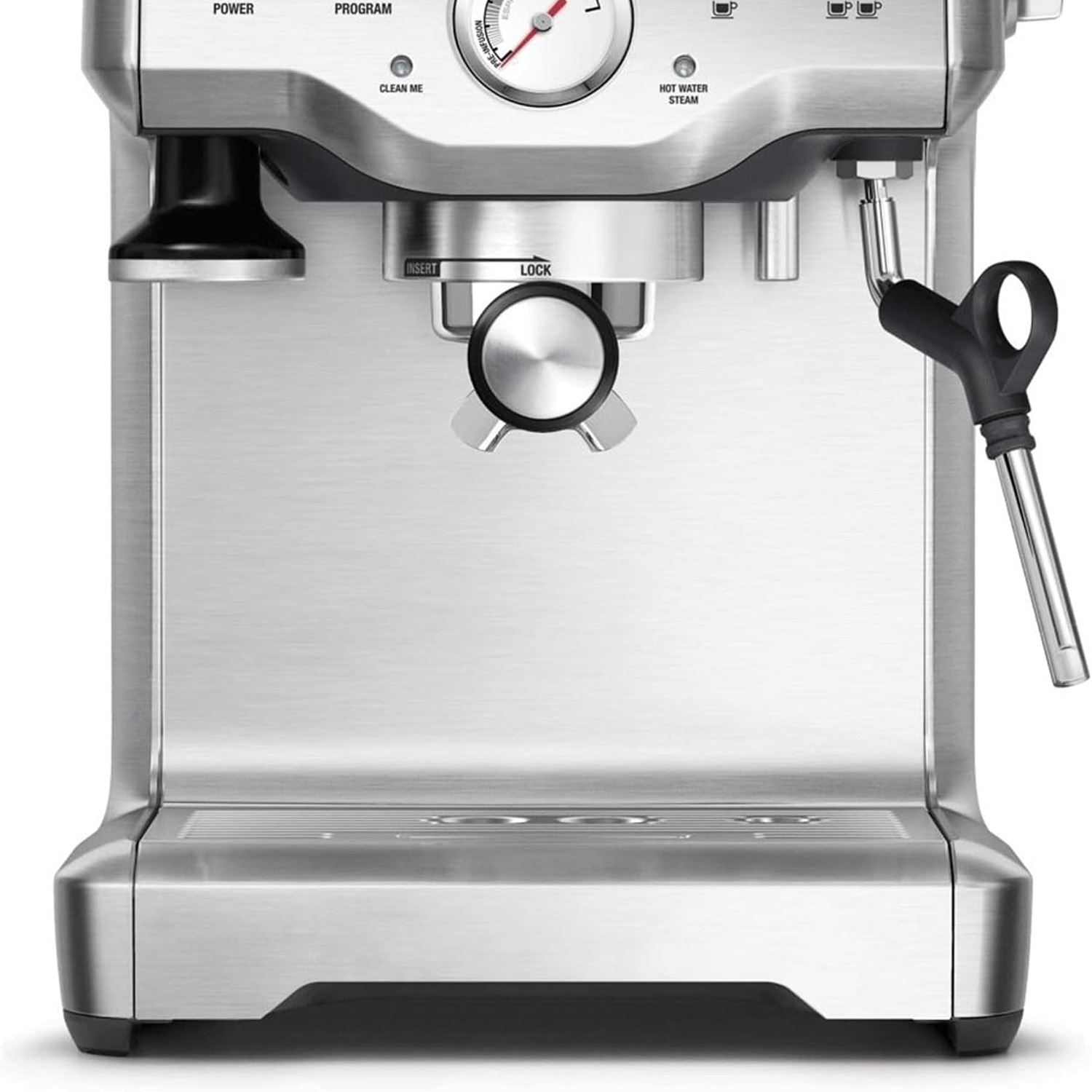
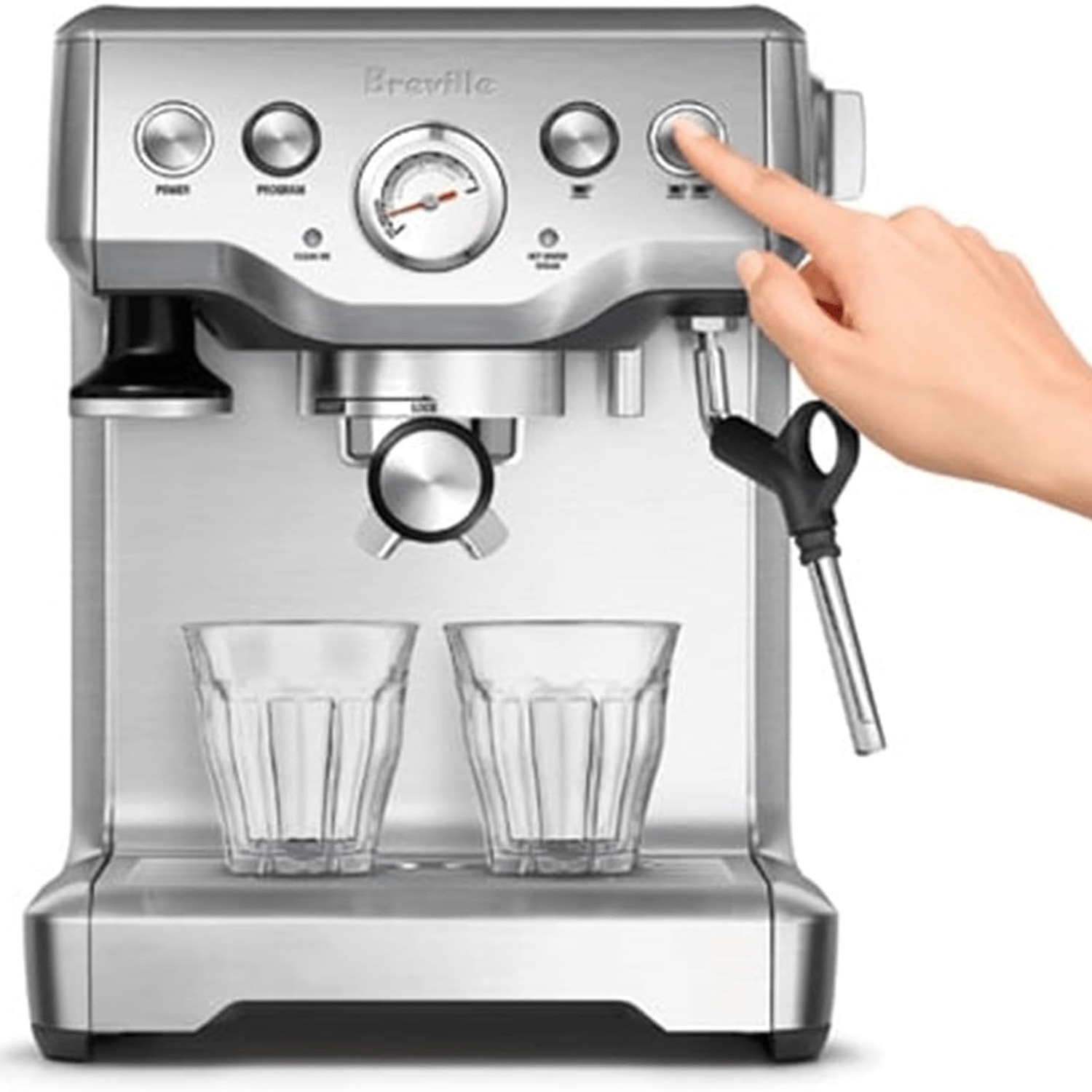
This pre-infusion espresso machine offers several useful points of control. It combines low-pressure pre-infusion with digital temperature management, a pressure gauge and adjustable shot settings. For milk drinks, you work with a manual steam wand and the included jug.
The main buying question is whether that hands-on routine suits you. There are also a few details to confirm before ordering, especially the electrical rating.
What pre-infusion brings to your coffee
Pre-infusion wets the ground coffee at low pressure before the main extraction pressure builds. The aim is to help water reach the coffee more evenly, rather than starting immediately at full pressure.
Think of it as a preparation stage, not a promise that every shot will taste the same. Your coffee, grind and preparation still affect the result. An espresso machine with pre-infusion gives you a helpful starting process, but it cannot make those other choices for you.
This matters most if you enjoy learning from each cup. Keep your preparation steady, taste the result and change one thing at a time. That approach makes it easier to understand what is helping.
Temperature control and the pressure gauge
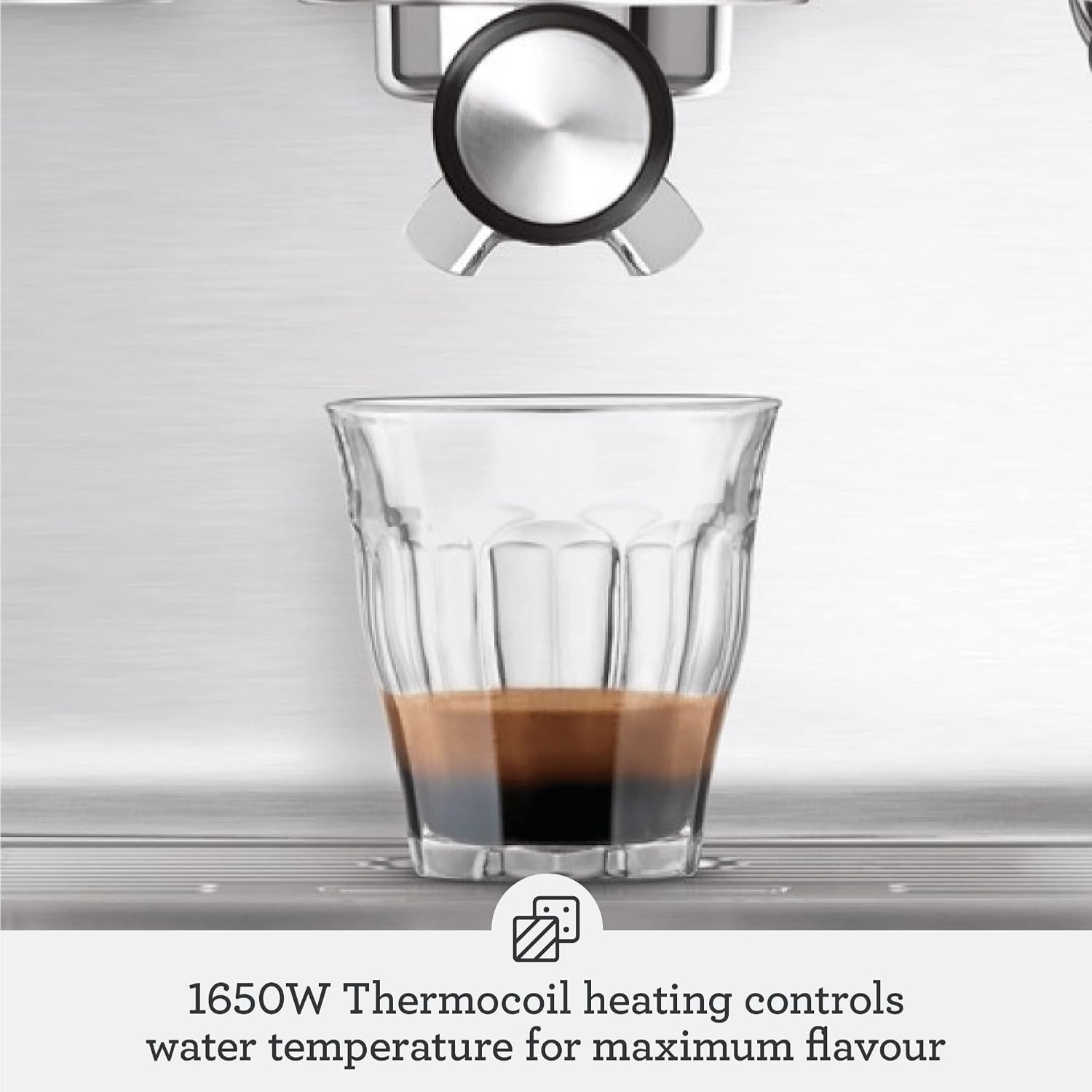
This machine lists digital PID temperature control, adjustable in 4°F increments. Temperature is one part of extraction, and having an adjustment gives you another way to explore the coffee you use.
You do not need to change it with every drink. Start with the manual's guidance and become familiar with your usual coffee before making small changes. If several settings change together, it becomes harder to know which one affected the taste.
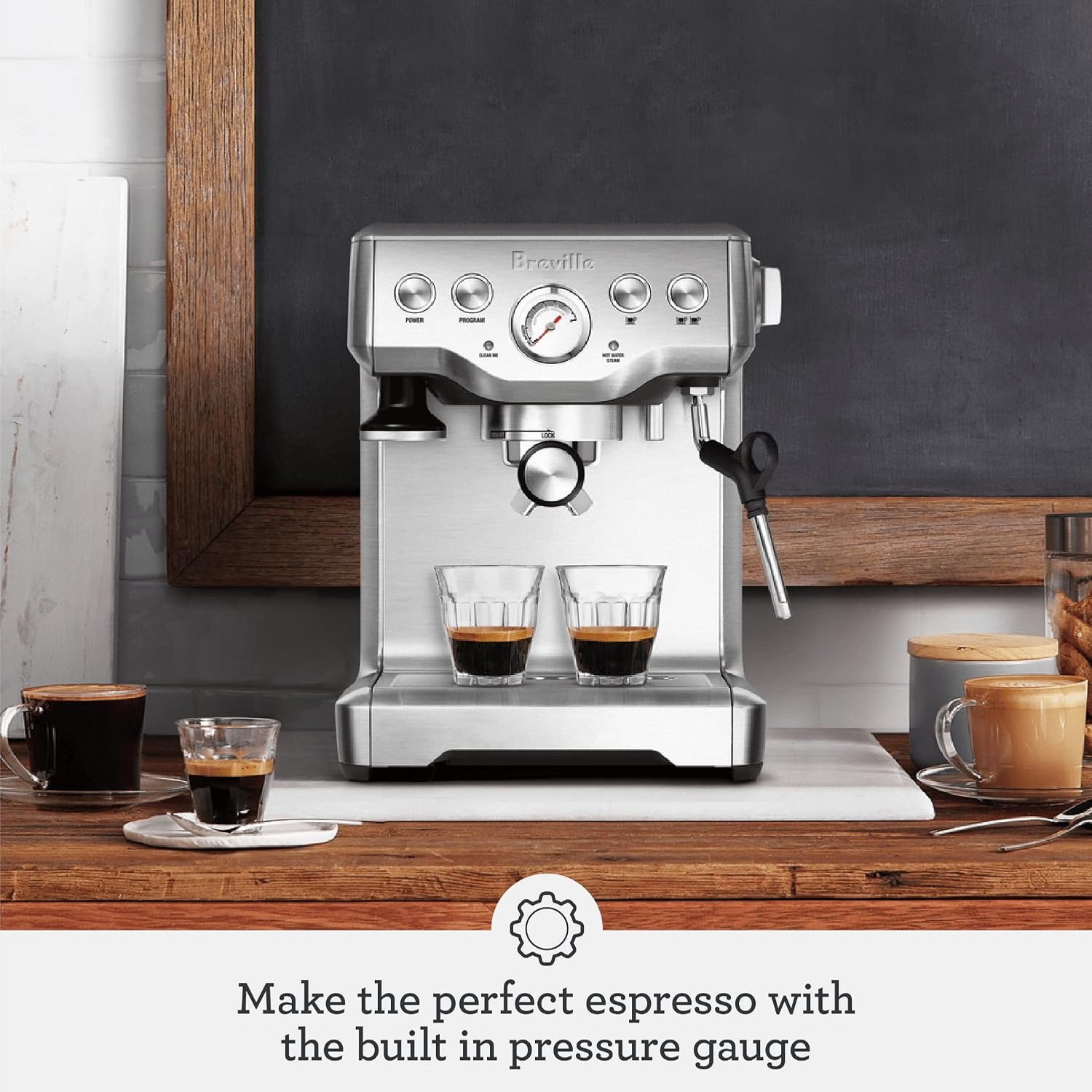
The pressure gauge offers a separate reference during brewing. An espresso machine with pressure gauge feedback can make the process easier to observe, particularly while you learn.
Still, a gauge reading is not the whole story. Use it alongside the flavour in the cup, rather than treating a particular reading as proof of a perfect shot. The maker does not give a target pressure range, so follow the machine's own instructions.
Shot settings without losing manual choice
Single and double shot settings give you familiar options for daily use. The machine also lists volumetric control and manual override, so you are not limited to one fixed approach.
A programmable espresso machine can be useful when you want a repeatable starting point. Once you find a preparation that suits your coffee and cup, consistent settings can reduce the number of decisions you make each morning.
Manual override leaves room for a more involved routine. Check the supplied manual for the exact button sequence, programming method and limits. Those operating details are not included by the maker.
The product details describe the operation mode as fully automatic. That needs context: milk texturing is explicitly manual, and the input is ground coffee. Do not read that label as a promise of one-touch bean-to-cup drinks.
Making milk drinks takes a little practice
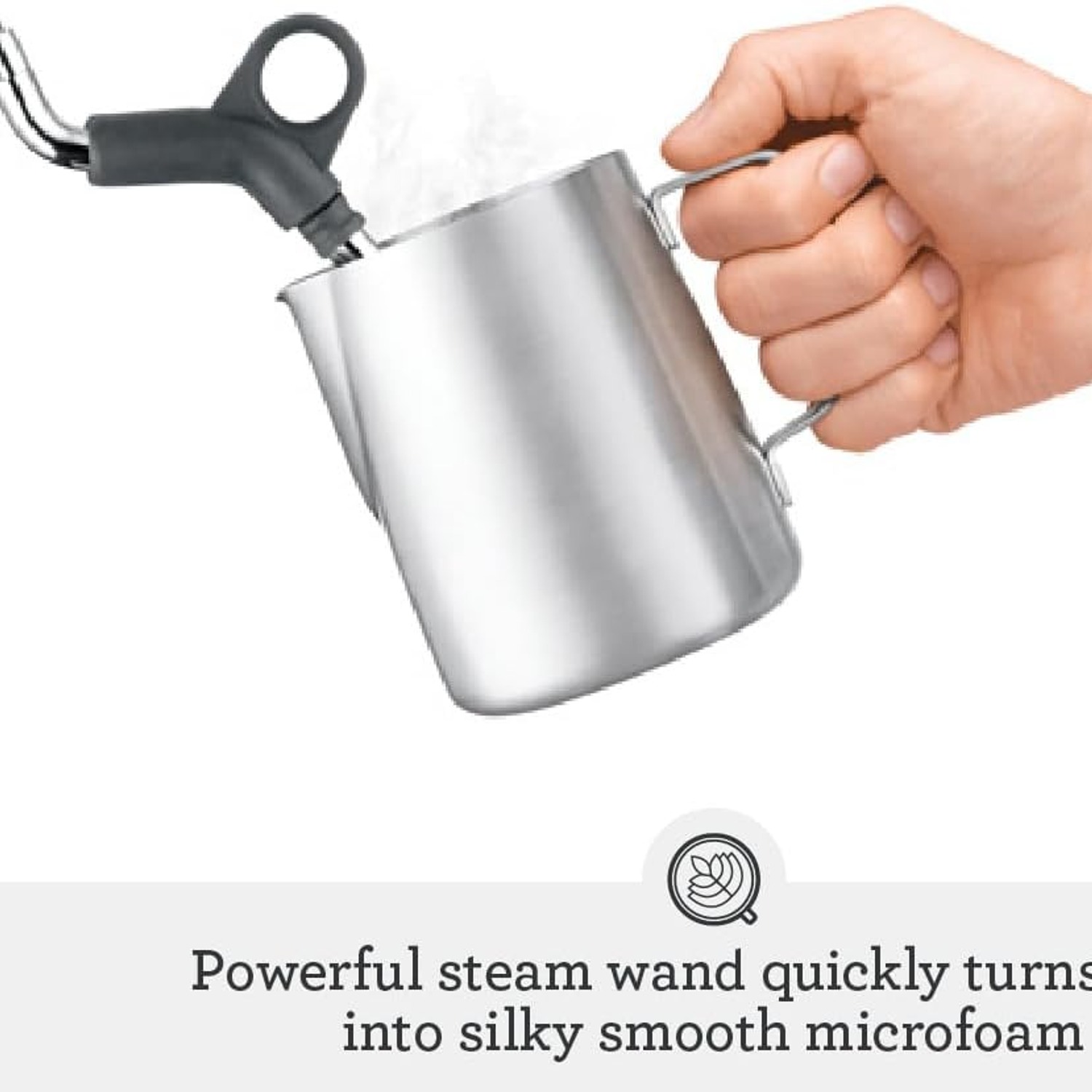
The steam wand is for manual milk texturing. You hold the jug and control the process, which means there is a learning stage if you have only used an automatic milk system before.
A stainless steel jug is included, so that part of the setup is covered. Its capacity is not specified. Choose your drink size and milk quantity according to the jug's markings, if present, and the supplied instructions.
An espresso machine with steam wand preparation suits someone who likes being involved in the result. You can practice texture and pouring, but latte art is a skill rather than an automatic feature.
After steaming, the machine automatically purges the heat system to prepare for the next espresso. That is a brewing function, not a replacement for cleaning milk residue from the wand. Keep those two jobs separate in your routine.
Decide how you want to buy coffee
This is a ground coffee espresso machine. A grinder is not listed among the included accessories, and capsule compatibility is not specified.
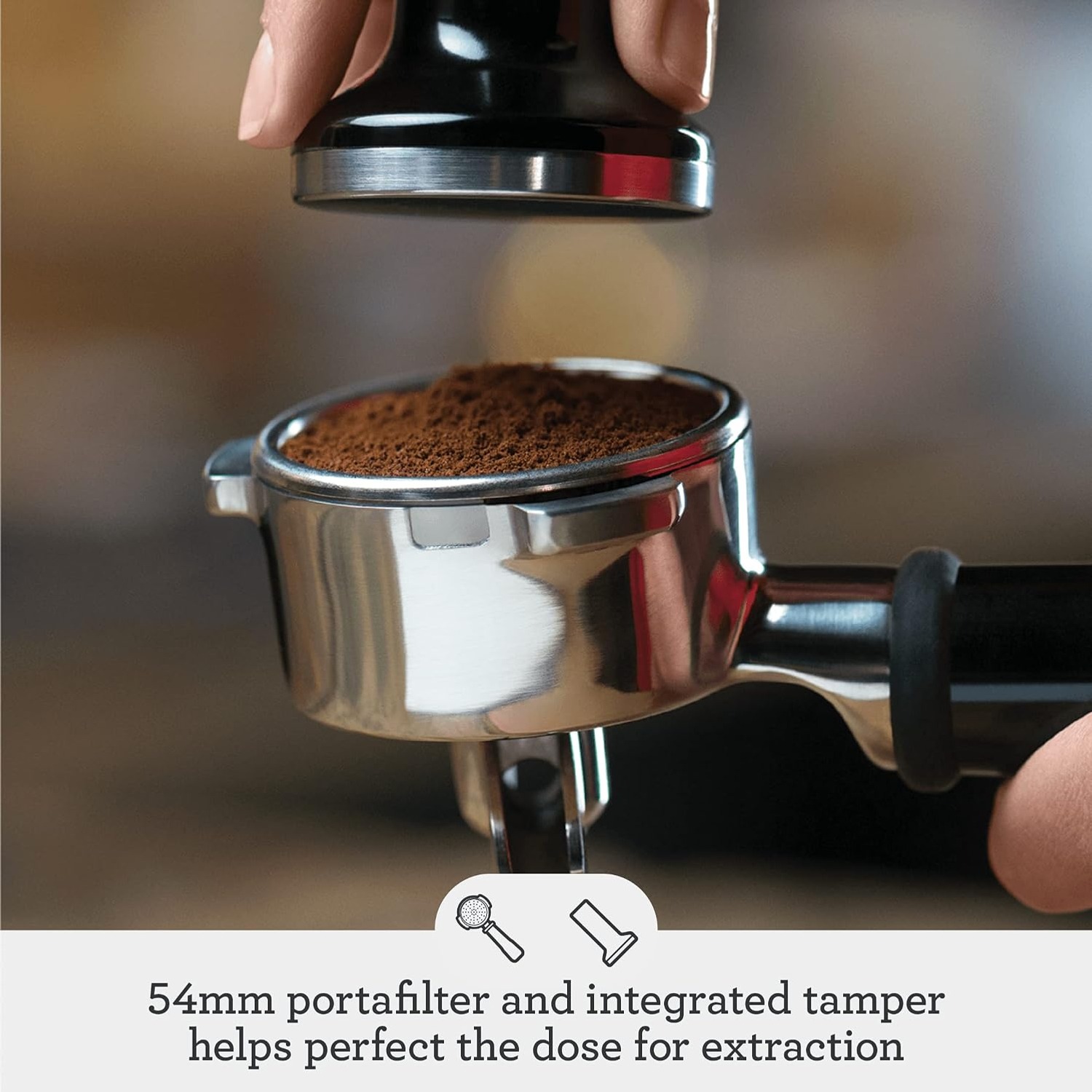
If you buy whole beans, account for a separate grinder when planning your setup and budget. If you prefer buying ground coffee, speak with your coffee maker about a grind intended for espresso and follow the machine's basket guidance.
The listed accessories include both single and dual wall filter baskets. Use the manual to understand which basket suits your coffee and how to prepare it. The maker does not give basket sizes or coffee doses, so avoid choosing extra accessories based on assumed measurements.
For many buyers, this choice matters as much as the machine itself. A coffee routine should fit the time and effort you are willing to give it on an ordinary weekday.
Measure the whole working area
The listed dimensions are 31.2 cm deep, 25.7 cm wide and 33.4 cm high. Measure your intended counter before ordering, including any space beneath cupboards.
The footprint alone does not describe the working area. You will also need room to handle the milk jug, reach the controls and remove parts for cleaning. Think about where wet accessories can rest without getting in the way.
At a listed weight of 10.41 kg, this is worth placing somewhere you can leave it. A stable, suitable surface makes more sense than a location that requires frequent lifting.
The brushed stainless espresso machine finish may fit many kitchen styles, but appearance should come after practical access. Picture yourself filling, brewing and wiping down the area before settling on its position.
Check the electrical rating before buying
There is conflicting voltage information in the maker's description. The detailed specifications list 240 V AC, while another passage refers to 110 to 120 V. Power is listed as 1650 W.
Confirm the rating of the actual supplied unit, along with its plug type and suitability for your local electrical supply. This should happen before purchase, not after the machine arrives.
Do not assume a travel plug adapter solves a voltage difference. Ask for clear confirmation of the unit being supplied if the maker's description or checkout information leaves any doubt.
A matching product name or exterior does not establish electrical compatibility.
Home use or a shared office kitchen?
Both home and office are listed as recommended uses. At home, this machine is most likely to appeal to someone who wants control over espresso and is happy to prepare milk manually.
As an office espresso machine, it needs a little planning. Decide who will refill it, clean the steam wand and deal with the used coffee. A shared appliance is easier to live with when those jobs have a clear owner.
The listed water capacity is 1.8 L. That helps you compare machines, but it is not a reliable cup-count promise. Drink size, rinsing and cleaning all affect water use.
No commercial duty rating or daily serving limit is provided. If you expect a steady queue of users, ask about suitability before buying rather than assuming that office use means high-volume service.
Cleaning is part of the purchase decision
A reusable filter reduces reliance on disposable brewing filters, but it still needs regular cleaning. Empty used grounds and care for the baskets according to the manual.
Milk residue deserves prompt attention. Follow the steam-wand cleaning procedure after use, and be careful around hot metal and steam. Waiting until the next morning makes cleaning a less appealing part of breakfast.
The accessory list includes a cleaning disc, tablets and a cleaning tool, plus a water filter with holder. These are useful supplied items, but they do not establish a fixed maintenance schedule.
Water conditions and use can affect maintenance needs. Follow the manual for cleaning cycles, descaling and filter replacement. For the exterior, switch off, unplug and allow the machine to cool before using a soft damp cloth.
Compare the complete setup, not just the machine
Before ordering, consider what you already own. Cups, a suitable coffee supply and possibly a grinder all belong in the wider plan. Avoid buying extra baskets or fitted accessories until their compatibility is confirmed.
Also check the terms that matter after delivery. The detailed specifications state a 12 Month Repair warranty, while the reference text describes a one-year limited product warranty. Confirm the applicable coverage and service process.
Read the destination-specific estimate and our return policy, including any conditions for opened or used appliances.
For a gift, ask about counter space and interest in manual milk preparation. A thoughtful match to someone's habits is more useful than a feature they will rarely use.
The short version
This countertop espresso machine combines pre-infusion, PID temperature control and pressure feedback with flexible shot settings. It also includes a manual steam wand and stainless steel jug for hands-on milk drinks.
It suits a buyer who wants to learn a repeatable coffee routine rather than expect every step to happen automatically. Check the working space, plan your ground-coffee supply and allow time for cleaning.
Most importantly, resolve the conflicting voltage details before purchase. Once compatibility and the supplied unit are confirmed, you can judge the machine on what matters most: whether its way of making coffee fits your day.