
The complete guide
Choosing a Coffee Scale with Timer for Your Daily Brew
A good cup of coffee can be hard to repeat when you are judging amounts by eye. One scoop may hold more coffee than another. A mug that looks half full does not tell you how much water went into the brew. Even when the ingredients stay the same, a change in brewing time can affect the result.
A coffee scale with timer gives you numbers you can return to. You can weigh the coffee, measure what you add or collect, and keep track of time. That does not remove the need to taste your coffee. It gives you a clearer starting point when you want to make a change.
This model combines a 3 kg weighing capacity, 0.1 g increments and two timing modes. Here is how to decide whether those features suit the way you brew.
Why weight and time belong together
Coffee recipes often depend on a relationship between ingredients. If you use more coffee but keep the water unchanged, you have changed that relationship. Measuring by weight helps you see the change rather than guess at it.
Time adds another useful piece of information. Two brews can use the same amount of coffee and water yet run for different lengths of time. Recording the weight alone would miss that difference.
A coffee recipe scale brings these measurements into one routine. You do not need to make every cup into a science project. A few notes about what you used, how long it took and how it tasted can be enough to help you repeat a cup you enjoyed.
What this scale offers
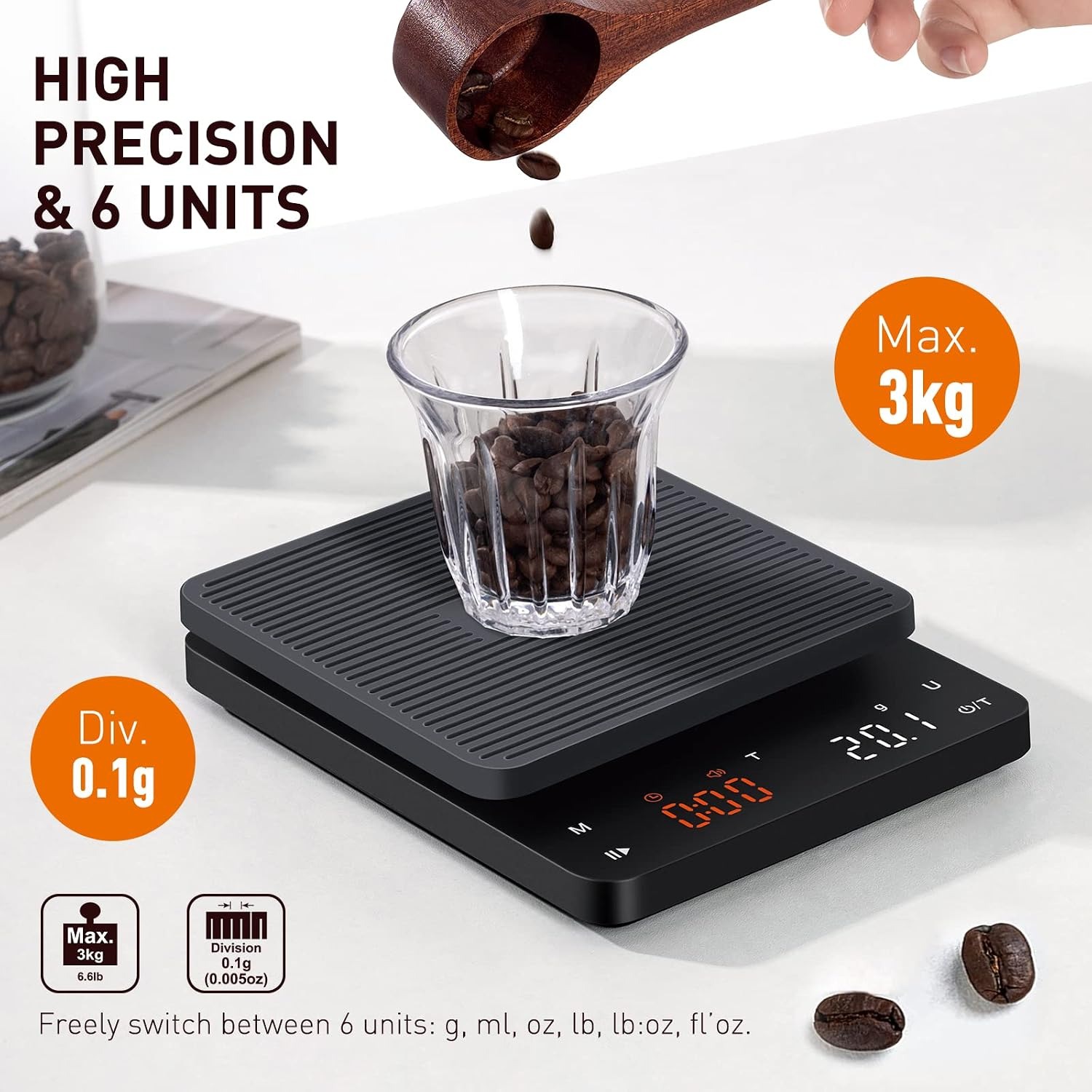
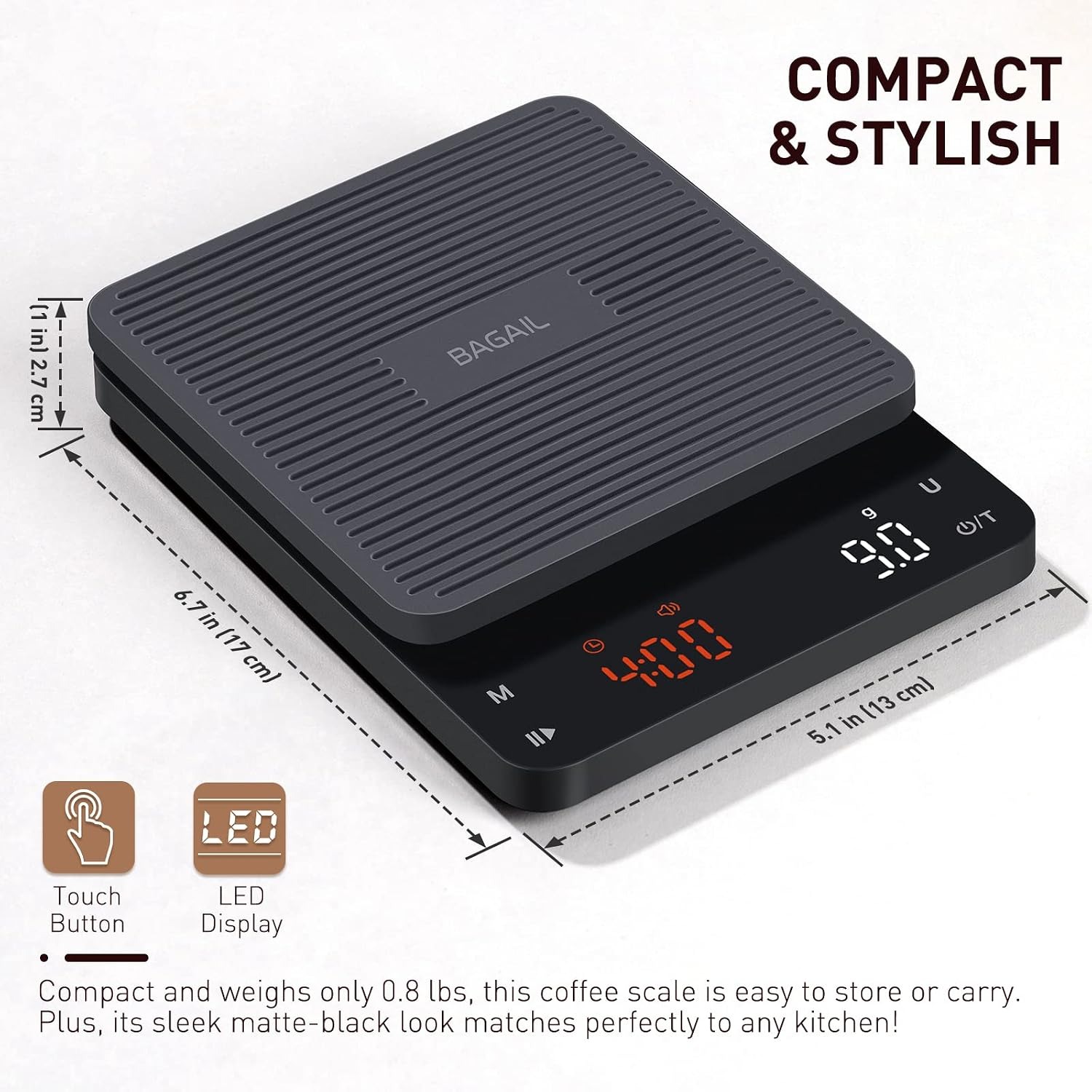
The stated maximum load is 3 kg. Its listed readout accuracy and graduation interval are both 0.1 g, giving you finer displayed steps than a scale that reads only whole grams.
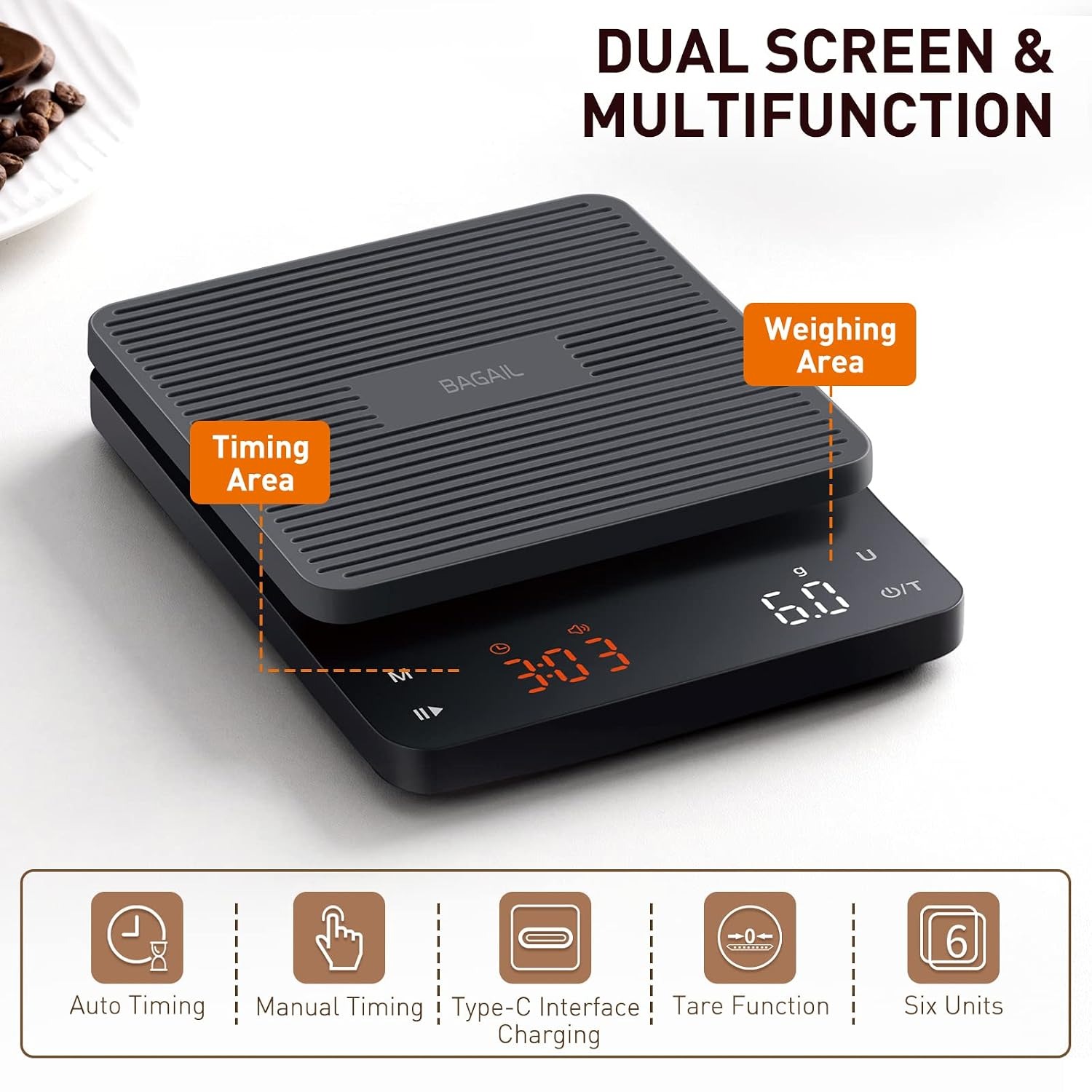
The feature list includes automatic tare, automatic and manual timing, a backlit display and automatic shut off. It also lists six measurement units. For most coffee recipes, grams keep the process simple because you can use the same unit for beans and brewing water.
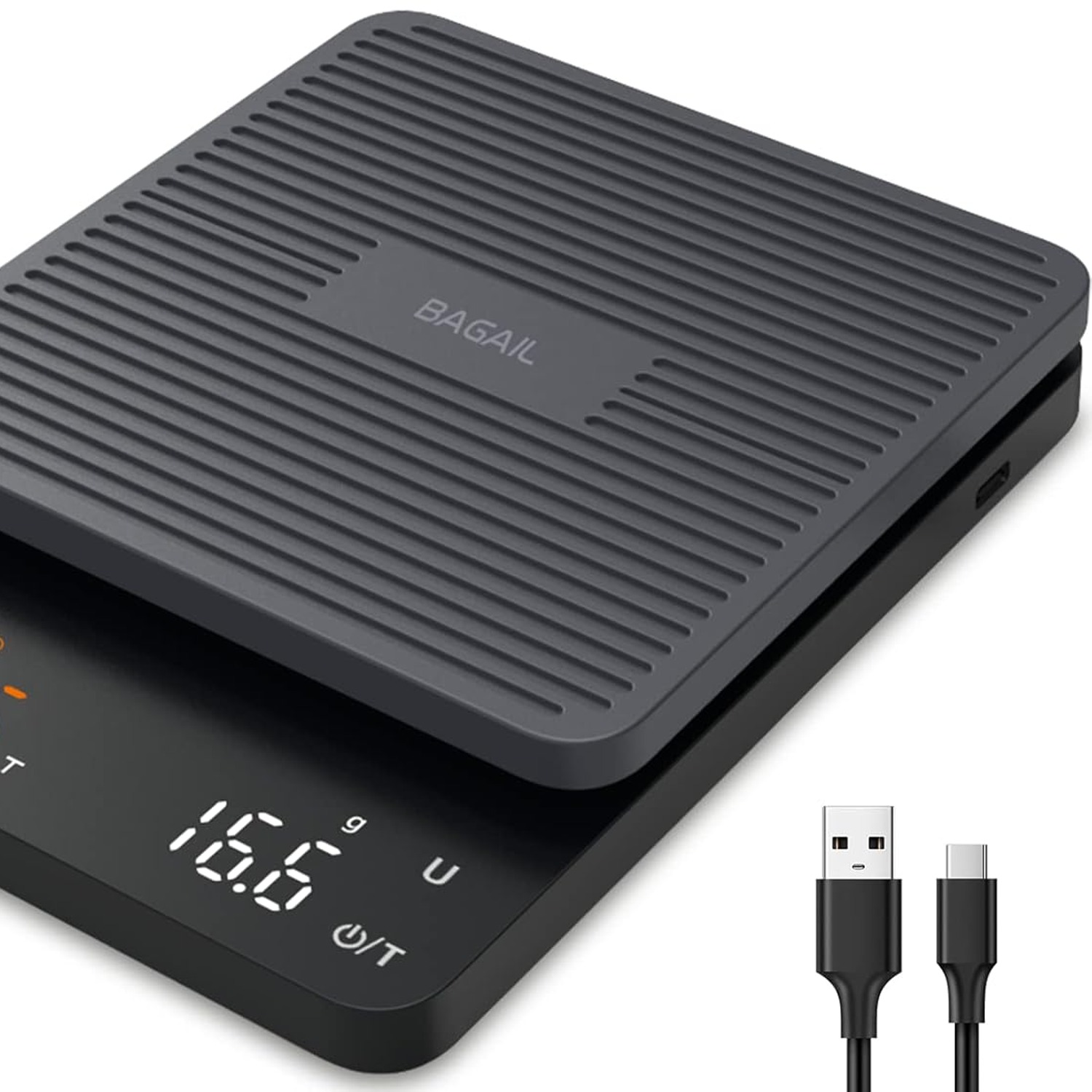
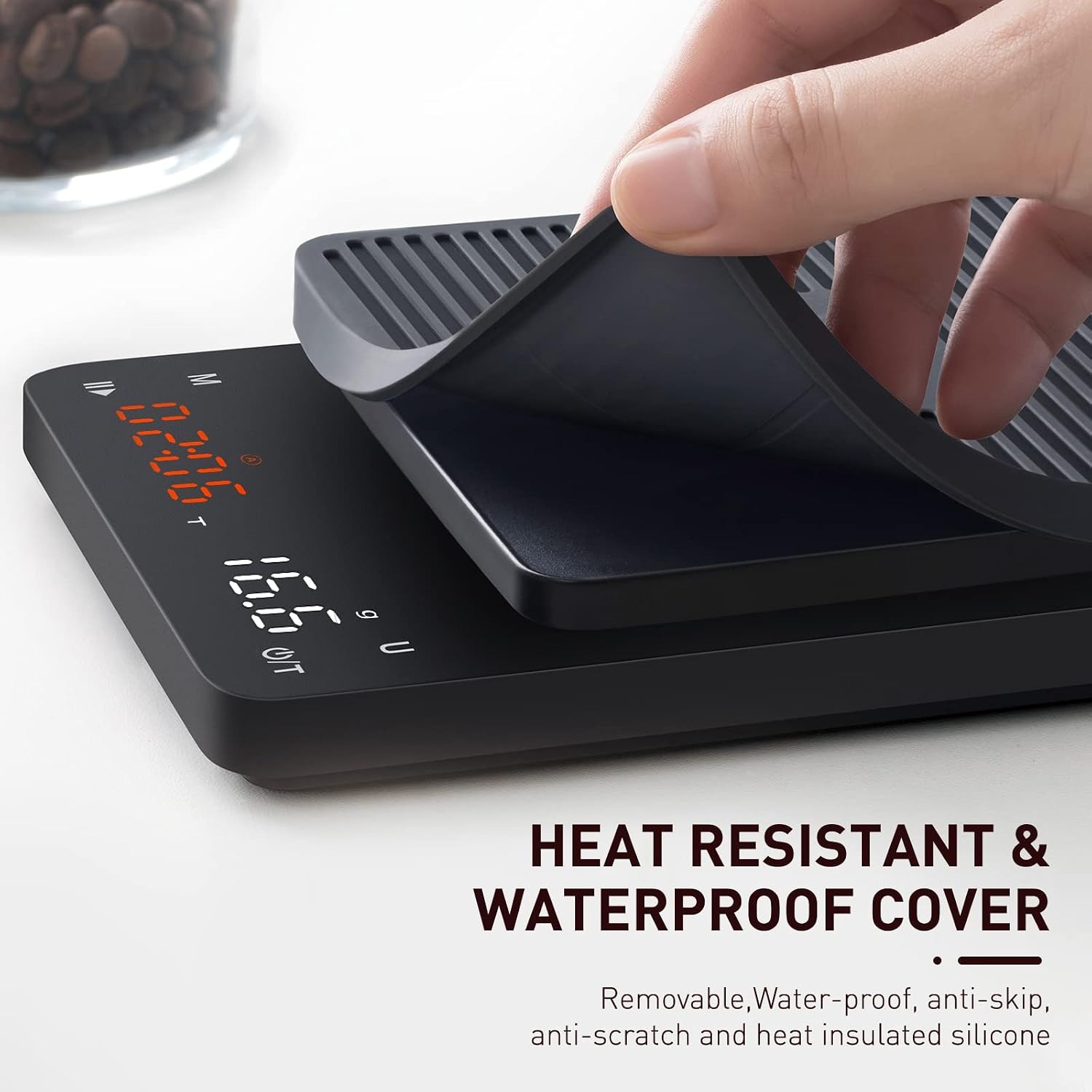
Power comes from a rechargeable lithium battery through a USB-C connection. A Type-C cable is included. The removable silicone pad sits over the platform and can be taken off for separate cleaning.
These are useful practical features, but they do not answer every buying question. The exact display technology and automatic timer trigger are not confirmed by the maker. If either detail matters to your routine, ask before ordering.
Using a scale for pour over coffee
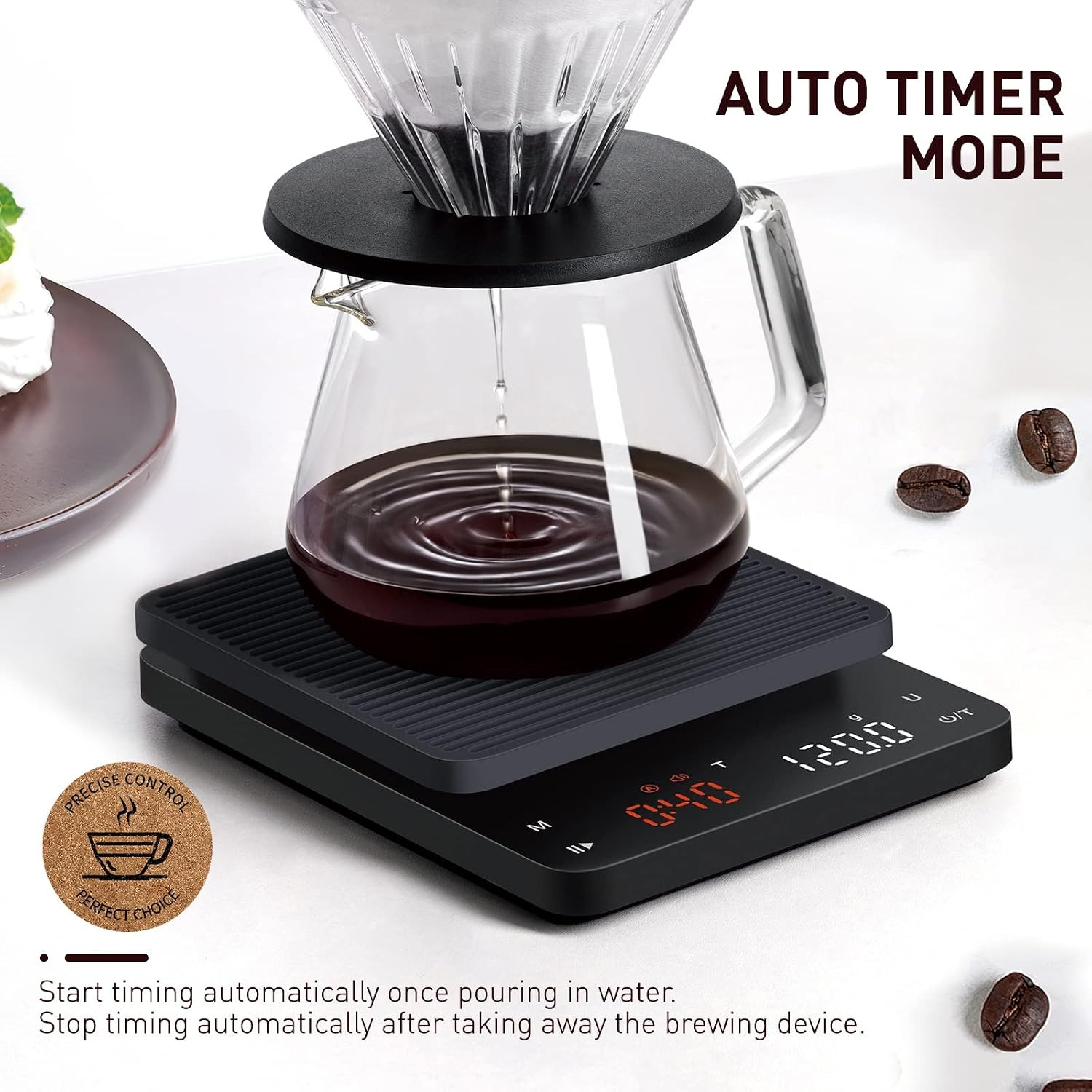
A pour over coffee scale lets you watch how much water you add as the brew progresses. That is helpful when a recipe calls for separate pours rather than one continuous pour.
Start with a stable, level surface. Place your brewing vessel and brewer on the scale, then follow the instructions for setting the weight to zero. Check that nothing touches a nearby wall, cable or appliance, since outside contact can interfere with a reading.
As you pour, use the weight display to follow your recipe. Use the timer to note the pace of the brew. There is no need to chase every small movement on the display. Pour steadily and compare the finished result with your notes.
Remember that capacity includes the whole setup. Your vessel, brewer, wet coffee and water all contribute to the load on the platform.
Using it for espresso
An espresso weighing scale can help you compare the ground coffee you put into a basket with the drink collected in the cup. Recording those weights alongside time gives you a more useful reference than cup volume alone.
Fit is the first question to settle. A scale must sit securely beneath your cup without catching on the machine or leaving too little space under the spouts. The fact that a product is listed for espresso does not mean it fits every machine.
Measure the usable space on your drip tray and the height available for both cup and scale. Confirm the product dimensions before ordering if clearance is tight.
Also think about your workflow. Can you see the screen while the cup is in place? Can you reach the controls comfortably? Those everyday details matter as much as the feature list.
Understanding 0.1 g readings
A display that changes in 0.1 g steps helps you make small adjustments. That can be useful when weighing a coffee dose or comparing one brew with another.
Still, the number of decimal places is not the whole story. A stable surface, careful placement and a clean platform all matter when using coffee weighing scales. Give the reading a chance to settle before recording it.
The maker lists both readout accuracy and graduation interval as 0.1 g. The maker gives no independent testing here. Treat that as the stated specification rather than a promise that every measurement will be identical under every condition.
A sensible routine helps more than constant correction. Keep your setup consistent, record the reading and use taste to decide what to change next.
Choosing a timing mode
This coffee timer scale offers automatic and manual timing. Manual timing gives you direct control over when the count begins. That may suit a recipe with a clear starting point you want to choose yourself.
Automatic timing may fit another routine, but its exact trigger is not described in the maker's description. Test it with water and read the instructions before using it for a coffee you want to record closely.
The same advice applies to automatic tare. Learn when it resets the display and how it behaves as you add or remove items.
A short practice session can prevent confusion during a real brew. It also helps you choose one method and use it consistently, which makes your notes easier to compare.
Checking capacity and placement
A countertop coffee scale needs a firm place to sit. Avoid balancing it across uneven surfaces or letting part of the base hang over an edge.
The 3 kg maximum load covers everything on the platform, not just the ingredient shown after tare. Setting a heavy vessel to zero does not remove its physical weight from the scale.
Think about the equipment you use most often. A single cup setup and a larger brewing vessel place different demands on space and capacity. Check both before choosing.
If your main goal is weighing beans before grinding, machine clearance may not matter much. If the scale will live under an espresso machine, fit may be the deciding factor. Buy for your actual routine rather than the longest feature list.
Living with USB-C charging
A USB-C coffee scale gives you a rechargeable option instead of a routine based on replacing disposable batteries. This model includes a Type-C cable, though a wall charger is not confirmed.
Choose a dry place to charge it, away from the sink and the area where you pour water. Make sure the charging port is dry before connecting the cable.
Automatic shut off is listed, but the maker does not state its delay or explain how it behaves while timing. Check that detail in the instructions so it does not surprise you during a longer brewing session.
A simple charging habit is usually easier to keep than waiting until a scale loses power midway through your morning routine.
Cleaning the pad and scale
Coffee brewing brings drips, grounds and the occasional spill. The removable silicone pad makes it possible to clean that part separately from the electronic body.
Lift off the pad and clear away loose grounds. Wipe the scale gently with a soft, lightly damp cloth, then dry it. Let the pad dry before placing it back on the platform.
The pad is described as waterproof. That does not mean the whole scale can be rinsed under a tap or immersed in water. No waterproof rating for the electronic body is given.
Keep liquid away from the charging port and avoid leaving wet grounds around the edges. Small, regular cleanups are easier than dealing with dried coffee later.
Who this scale suits
This model is worth considering if you want weight and time in one of your home barista tools. It can suit someone moving from scoops to measured doses, or a coffee drinker who wants clearer notes about each brew.
It may also be a useful gift for someone who enjoys trying recipes. Before buying, check what they already own. A second scale is less helpful if their current one already fits their needs.
For buyers comparing the best coffee scale with timer for their setup, practical fit should come first. Confirm machine clearance, understand the timing controls and check delivery and returns terms. The listed 18-month warranty is useful to note, but its coverage details should also be confirmed.
The short version
This digital coffee scale combines 0.1 g increments, a 3 kg capacity, automatic tare and two timing modes. USB-C charging and a removable silicone pad round out the main features.
Choose it because those features match how you brew. Check the fit, learn the controls and keep a few simple notes. A scale cannot choose your favorite coffee for you, but it can make the steps behind that cup easier to repeat.