
The complete guide
A Practical Guide to Choosing a Compact Manual Espresso Machine
When coffee space is tight but you still want espresso
A coffee setup can take over a kitchen faster than expected. The machine needs a home, but so do the coffee, cups and cleaning tools. If your bench is small, choosing by appearance alone can leave you with a machine that fits yet feels awkward to use.
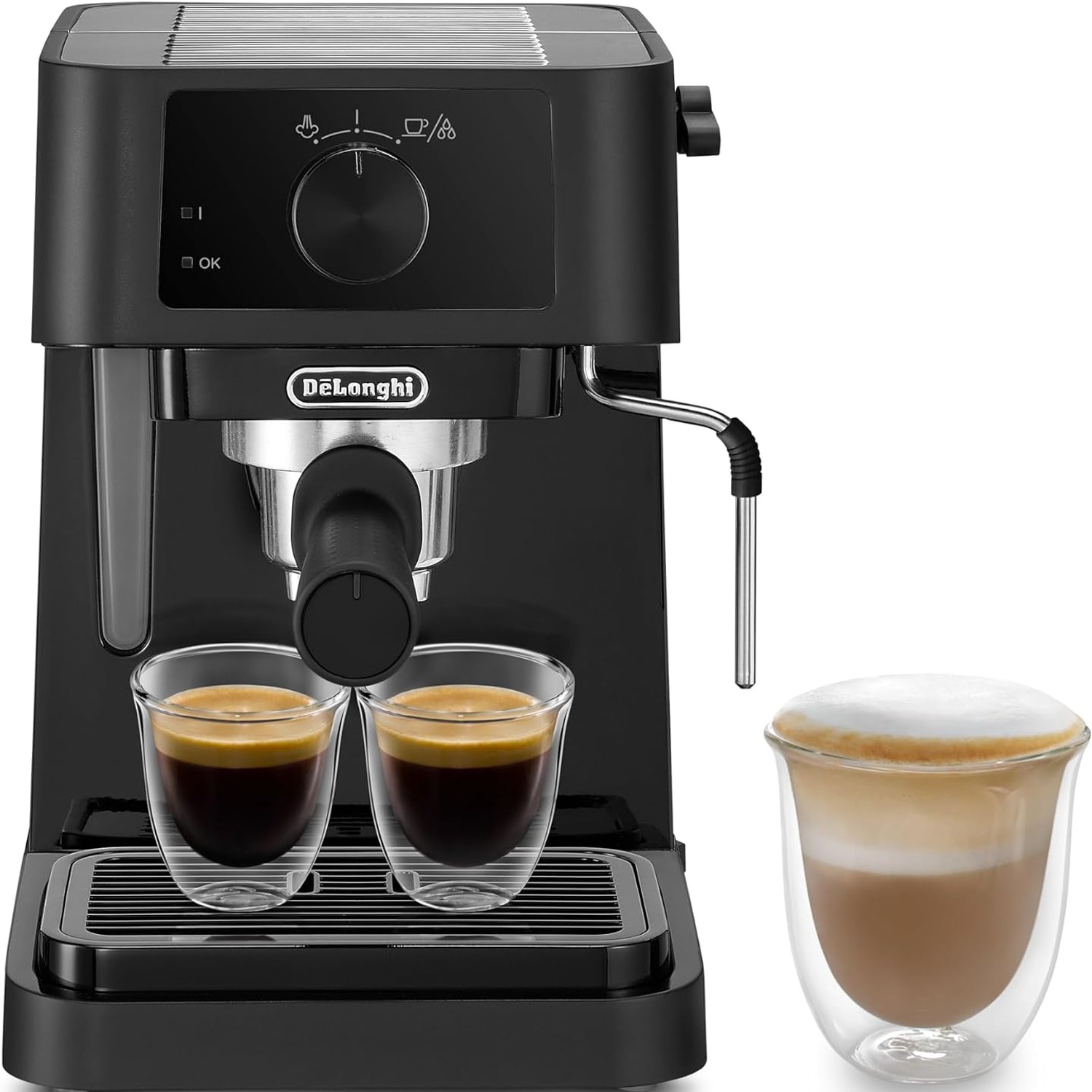
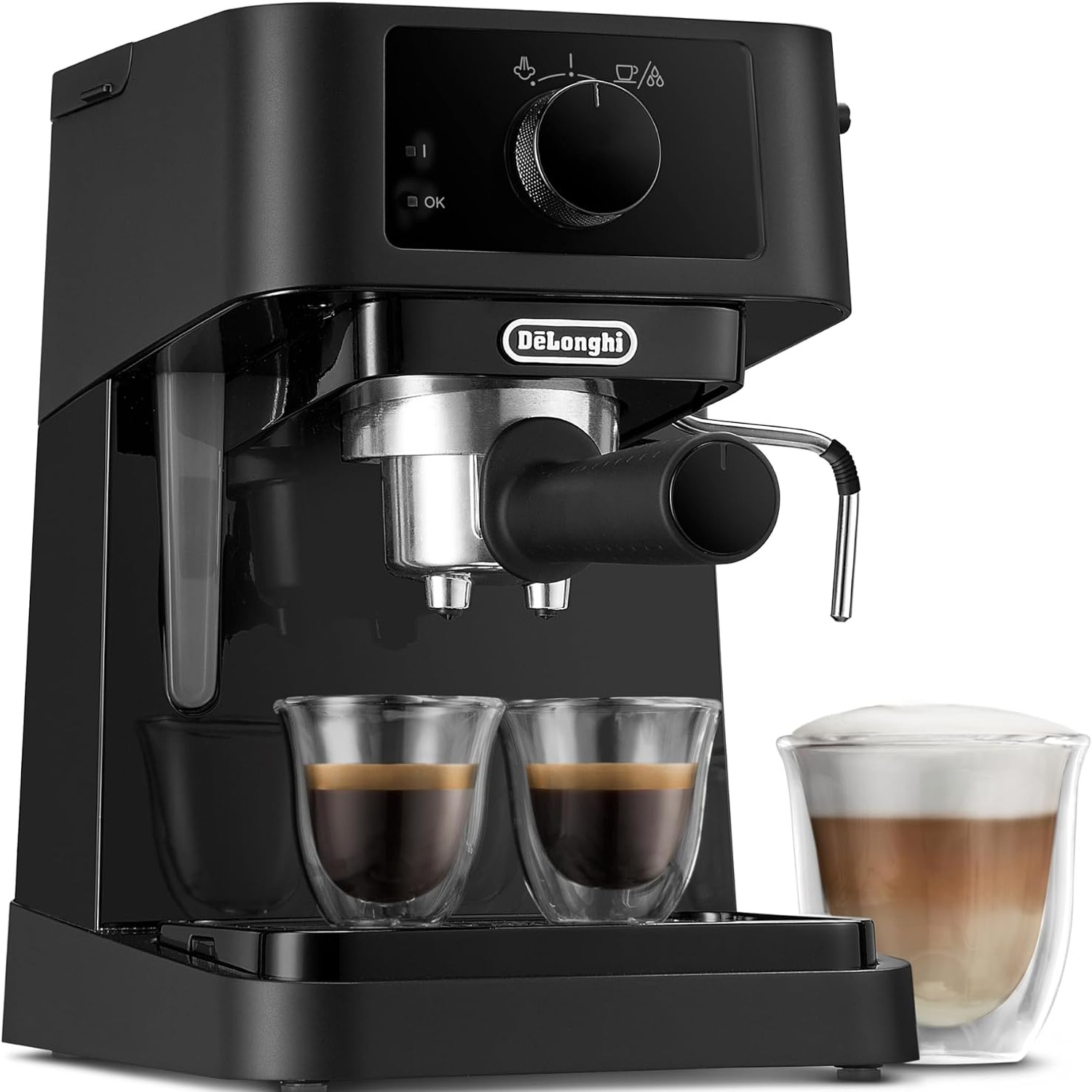
This compact manual espresso machine offers a narrower option for home ground-coffee preparation. Its listed width is 20.5 cm, with a depth of 34.3 cm and height of 28.5 cm. It includes a milk frother, removable tank and reusable filter.
The main question is not just whether it fits. It is whether you want the hands-on routine that comes with a manual home coffee maker. Preparing coffee, frothing milk and cleaning afterwards are part of the experience.
What manual operation means for your morning
The specifications list manual operation with button controls. That points to a machine for someone who wants to take part in brewing, rather than choose a named drink and leave every step to the appliance.
There is a small inconsistency in the maker's description. The included-component description calls the machine automatic, while the operation field says manual. There are no confirmed automatic drink programs. It is safer to base your choice on the manual specification and ask for clarification if one-touch brewing matters to you.
A ground coffee espresso machine also gives you a choice of coffee. You can buy suitable pre-ground coffee or use a separate grinder. No grinder is listed in the package.
For some people, that involvement is the appeal. For others, it is an extra task before work. Think about the morning you actually have, rather than the leisurely coffee routine you might enjoy on a weekend.
Understanding the 15 bar specification
This model lists a rated output pressure of 15 bar. It is a useful comparison detail, but it is not a promise that every cup will taste a certain way.
Coffee choice and preparation still matter. Changing the grind or the amount of coffee can change the drink, so a pressure number should not be your only buying test. A 15 bar coffee machine does not remove the need to learn how your coffee behaves.
Start with the supplied instructions rather than a recipe intended for a different machine. Keep your first few attempts consistent, then make small changes as needed. Changing several things at once makes it harder to work out why a cup tastes different.
The maker does not specify brewing temperature, heating time or detailed pressure control. If one of those is central to your decision, confirm it before ordering.
Espresso and milk coffee from one setup
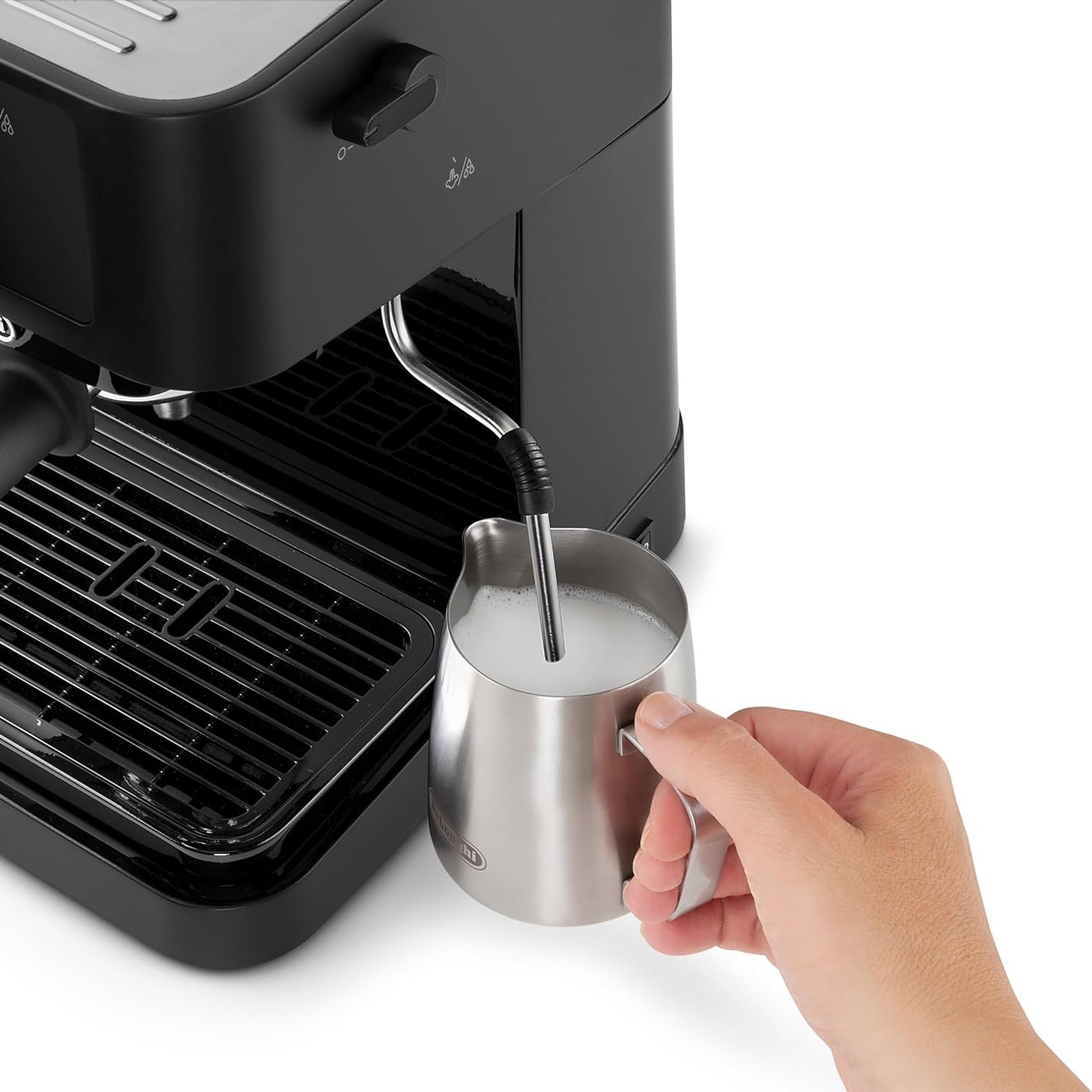
The traditional stainless steel steam wand is a key feature for people who drink milk coffee. It gives you a way to prepare milk alongside espresso without choosing a separate frothing appliance.
This makes the machine a possible fit for cappuccino drinkers and those who prefer flat whites. It does not mean the milk process is automatic. You will need to learn how to handle the wand and judge the texture.
Allow yourself a little practice. A drink that tastes good is a more useful early goal than a perfect pattern on top. Follow the safety instructions, especially around hot milk and steam.
A milk jug is not confirmed among the included accessories. Check what comes in the box before planning your first coffee session. It is better to know you need another item before the machine arrives.
Measure a working space, not just a parking space
The body measures 34.3 cm deep by 20.5 cm wide by 28.5 cm high. Those measurements are a starting point for a compact coffee station, not the full amount of space you should reserve.
You also need room to prepare coffee, reach the controls and work with the frother. Think about where a wet filter or used cup will go. A machine pushed tightly between other appliances may fit on paper but be frustrating in practice.
Check access around any overhead cupboards. The removable tank is helpful, but you still need a practical way to take it out and put it back. The maker does not specify the clearance needed for that movement.
The listed weight is 4.5 kg. If you plan to store the machine away between uses, consider whether moving it regularly will be convenient. A permanent place may make daily coffee preparation simpler.
Match the capacity to the way you drink
The listed capacity is 0.47 litres, or 470 ml. That is worth comparing with your household's habits, especially if several people want coffee around the same time.
Do not turn the capacity into a promised cup count. Drink sizes and the way the machine uses water can affect how often you need to refill. The maker does not give a tested number of coffees per tank.
An espresso machine with removable tank makes refilling more accessible, but a small capacity still means keeping an eye on the water level. Consider whether that suits your routine.
For home use with pauses between drinks, this may be an acceptable trade-off for the size. If you need repeated drinks for a busy office or guests, ask about operating limits first. Commercial use and back-to-back performance are not stated.
Check cups and accessories before buying
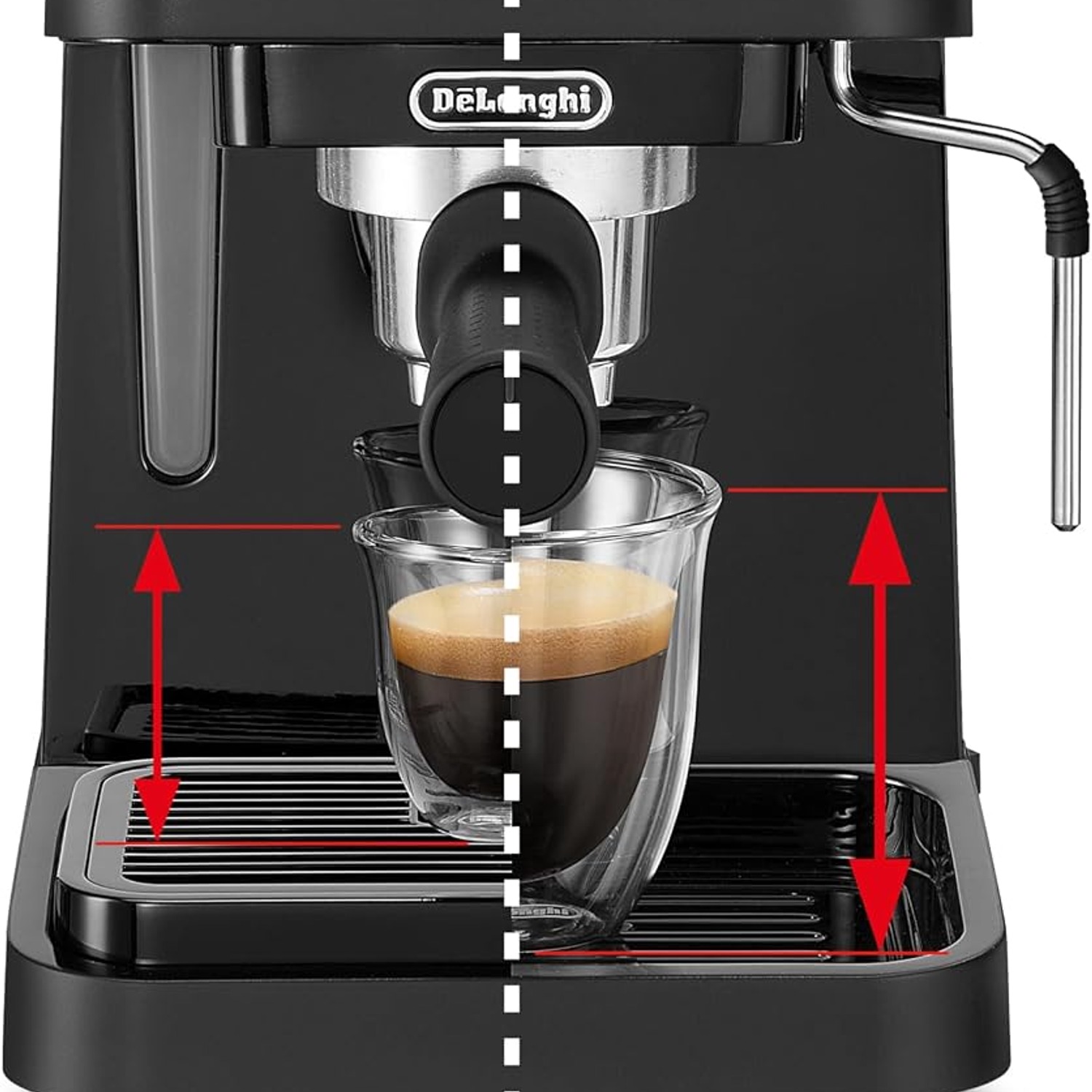
Cup fit is easy to overlook. The maker describes space for mugs from 8 to 11 cm high with adjustment through the removable drip tray.
Measure the cups you use most often. A favorite tall mug may need a different arrangement, and a large travel cup should not be assumed to fit. Width and handle position can also affect how comfortable a cup is to place.
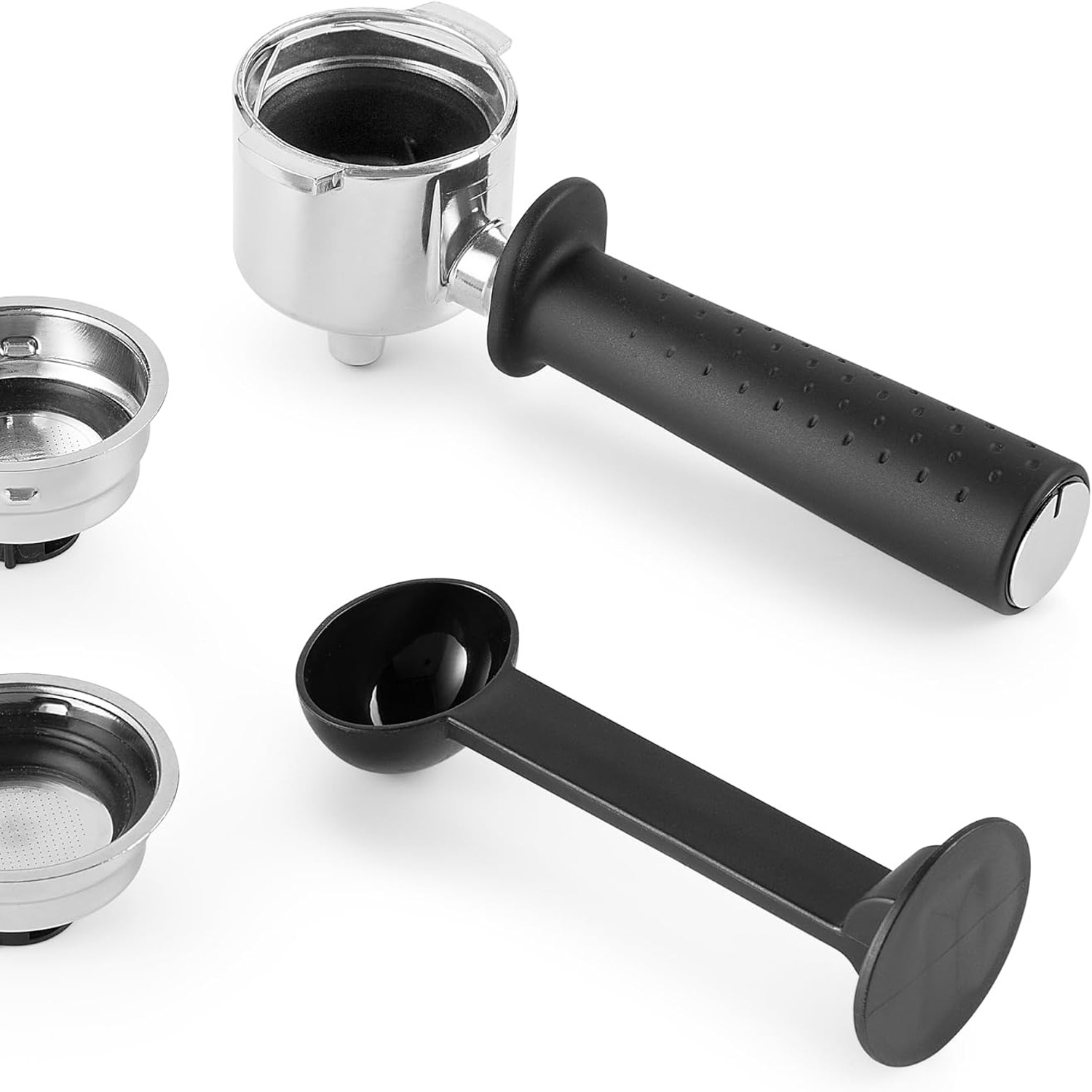
The reusable filter is listed, but its exact dimensions and basket design are not. Avoid ordering replacement filters or accessories based only on a photograph or the machine's pressure rating.
The maker states the box holds one black 1100 W coffee machine. It does not confirm a separate tamper, milk jug or grinder. If you are building a coffee setup from scratch, check these details so you can budget for anything else you may need.
Electrical compatibility deserves a separate check
This machine is specified at 1100 W and 240 V. The regional style is AU, and the power source is listed as an AC adapter. The exact plug and electrical arrangement are not detailed.
For a local purchase, still check the supplied rating information before use. For an international purchase, make compatibility a firm buying requirement rather than an assumption.
A plug adapter changes the connection shape; it does not by itself make a 240 V appliance suitable for a different supply voltage. The maker does not describe dual-voltage operation.
If you are unsure, ask us to confirm the electrical details for your destination. Do that before ordering, particularly if the machine is a gift or will be used outside its listed regional market.
Build cleaning into the routine
A reusable filter and removable drip tray are useful only if they stay clean. Coffee residue and milk left behind can make the next use less pleasant and add work later.
Follow the manual for cleaning the filter and milk wand after use. Hot parts require care, so do not improvise a cleaning method while the machine is still hot. Switch off, unplug and allow cooling where the instructions require it.
Wipe the exterior with a soft damp cloth. Do not immerse the machine or electrical parts. The maker states that the item is not dishwasher safe, and there is no confirmed dishwasher permission for individual removable parts.
Use the manual's guidance for descaling as well. No interval or approved solution is given in the maker's description. Guessing a chemical or schedule from another machine is less useful than following instructions written for this one.
Who this machine is likely to suit
This small espresso machine is worth considering if you want ground-coffee choice, a milk wand and a compact body. It is aimed at home use and leaves room for a hands-on approach.
It may be less suitable if you want a built-in grinder, confirmed automatic milk drinks or a large water supply. Those are different priorities, and the maker does not establish those features here.
As a gift, it makes most sense for someone who already likes the idea of manual coffee preparation. Check their available space, electrical supply and willingness to clean a steam wand. A thoughtful match matters more than a surprise feature.
Read the current store policies before purchase and ask about anything that would affect your decision.
The short version
Choose this compact espresso maker for its stated basics: manual controls, ground coffee input, a 15 bar rating and a traditional milk frother. Its removable tank and narrow body are useful points to weigh against the 0.47-litre listed capacity.
Measure your working space, check your cups and confirm the 240 V electrical requirements. If you enjoy preparing coffee yourself and are happy to learn the milk routine, it is a model to consider. If you want less involvement, compare it with a machine that clearly lists the automatic functions you need.