
The complete guide
Choosing a 500ml Insulated Stainless Coffee Plunger
A large coffee maker can feel unnecessary when you only want a small batch. It takes up space, may brew more than you need, and can turn a simple coffee break into a longer task. A manual plunger offers a different routine. You bring the coffee and hot water, then control the brew yourself.
This insulated stainless coffee plunger has a listed capacity of 500ml. Its double-wall body helps slow heat loss, while a reusable filter separates the grounds before you pour. It is worth considering if you enjoy French press coffee and want a smaller vessel without an electric brewing unit.
The main question is whether its size and brewing style match how you drink coffee. Here is what to check before choosing.
Start with the amount you actually drink
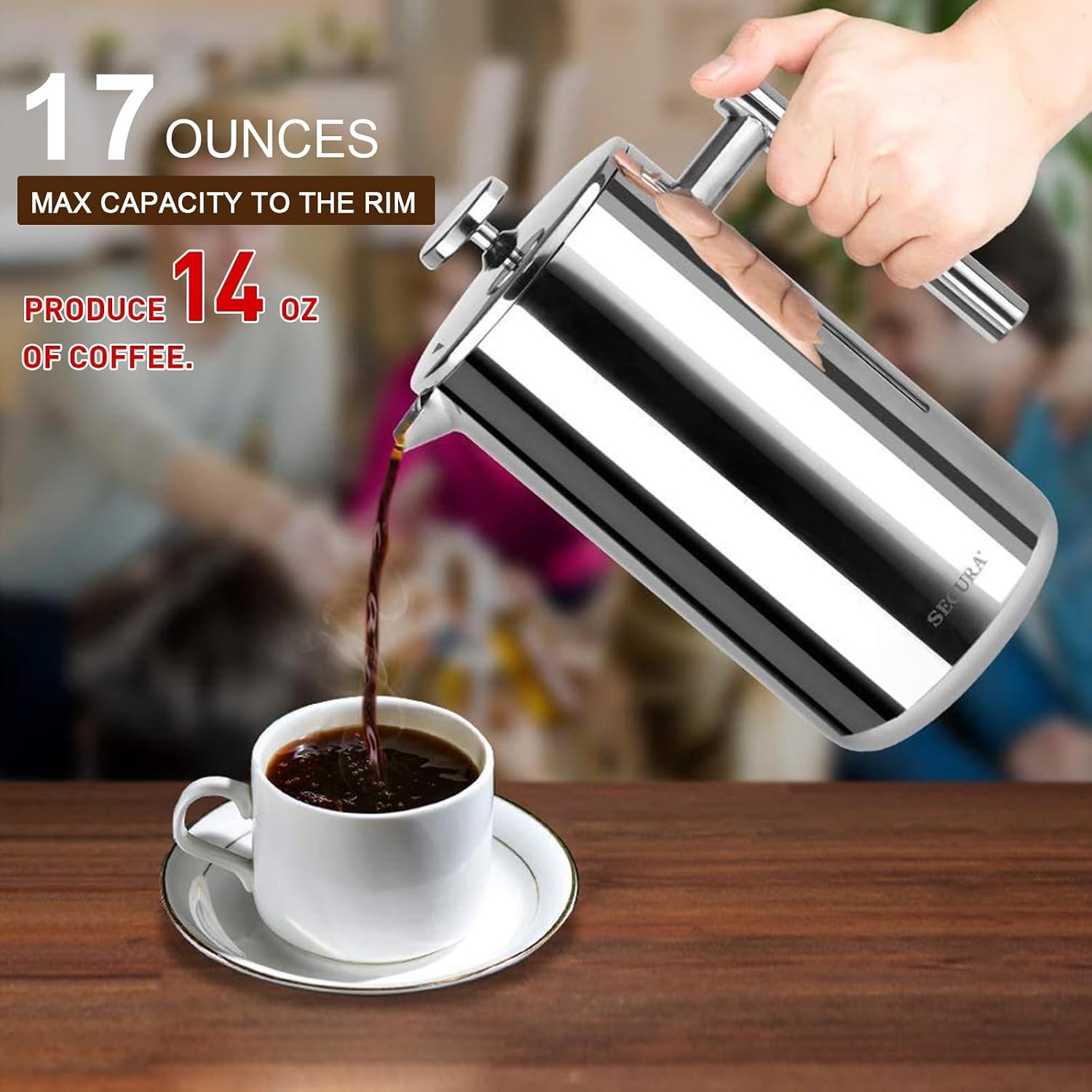
Capacity is more useful than a vague cup count. One person's coffee cup may be half the size of another person's mug. The 500ml figure describes the vessel capacity, not a promise of a particular number of servings.
Ground coffee takes up room and absorbs water. You also need enough space to fit and lower the plunger safely. As a result, you should not expect to pour the full listed capacity into your cups after every brew.
Measure the mug you use most often. If you regularly make coffee for several people, a small coffee plunger may mean brewing again. If you usually make a modest batch for yourself, this size may be a better fit than a larger press.
Think about weekends as well as workdays. Choose for the routine you follow most often rather than the largest gathering you might host.
How French press brewing works
A French press coffee maker uses immersion. The grounds sit in hot water while flavour moves into the brew. Once the coffee has steeped, you lower the filter assembly to hold most of the grounds beneath it.
That process differs from drip brewing, where water passes through coffee and a filter. It also differs from espresso, which uses pressure. A plunger makes French press coffee, even if you brew it strong or serve it in a small cup.
The method leaves several choices in your hands. You can adjust the amount of coffee, water and steeping time. There is no programd brewing cycle to choose those settings for you.
For someone who likes a repeatable routine, it helps to note what you used. A simple record of coffee amount and brewing time can make your next batch easier to match.
What the insulated body adds
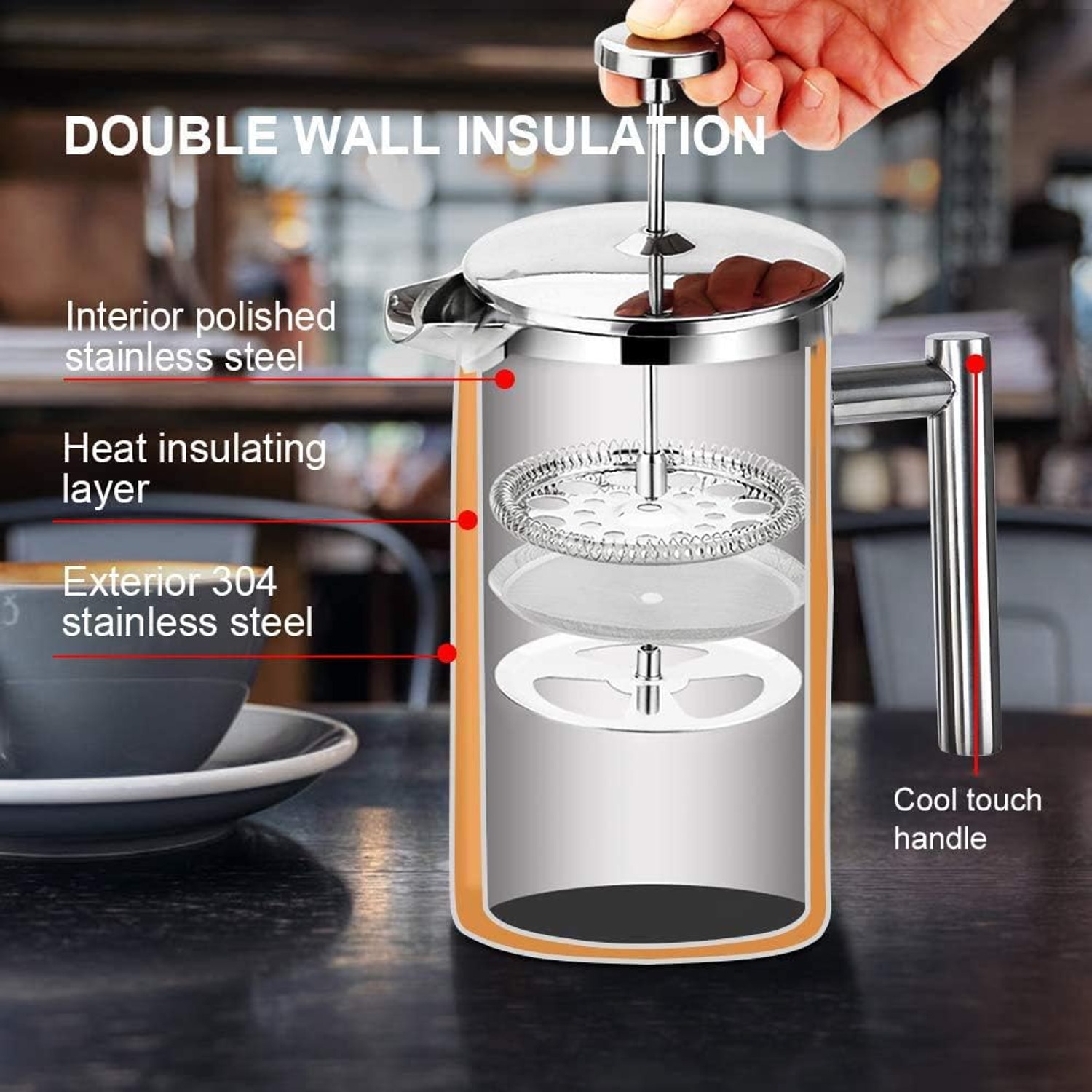
The maker describes a double-wall stainless steel body. Compared with a single-wall vessel, that construction helps reduce heat loss. It can be useful during steeping, particularly when you want to avoid the brew cooling too quickly.
There is no tested heat-retention time in the maker's details. That means you should not choose it on the assumption that coffee will stay hot for a specific number of hours.
An insulated coffee press is also not the same thing as a heated brewer. It does not add heat to the water. You need to heat water separately, then bring it to the press.
Pouring your coffee when it reaches the strength you like is a sensible habit. Leaving brewed coffee sitting with the grounds can change its taste, even after you have lowered the plunger. Insulation does not stop that contact.
Match the filter to your coffee preferences
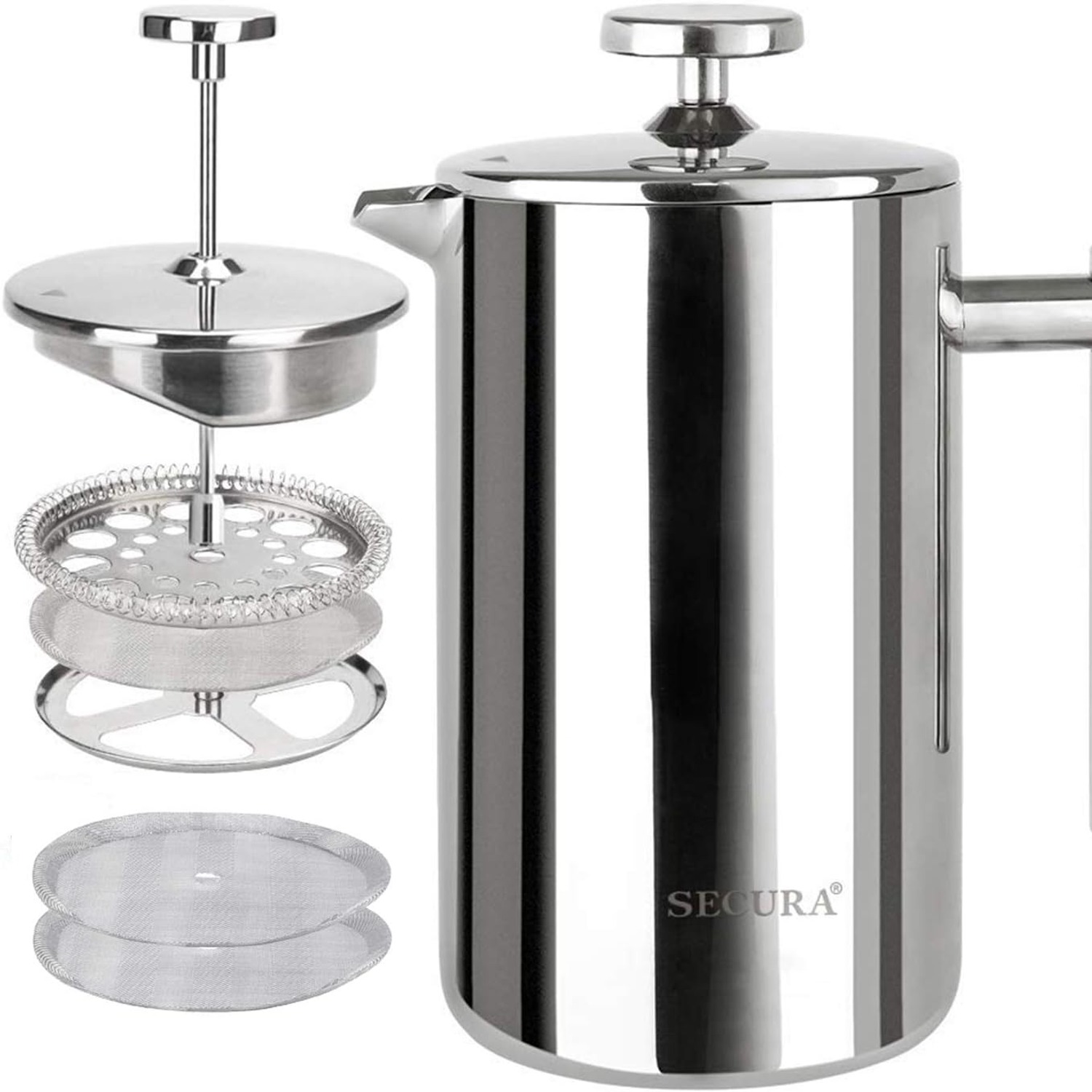
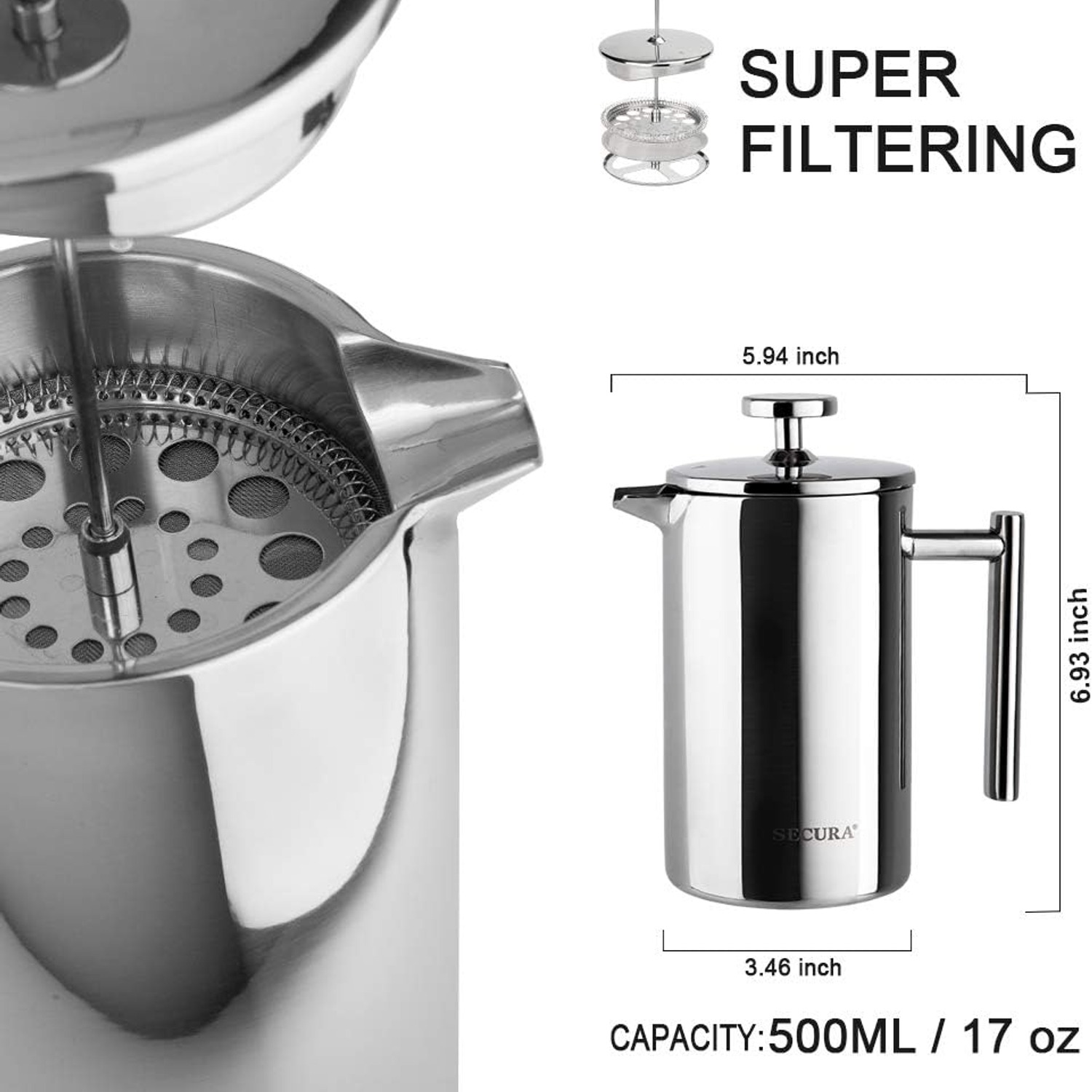
This reusable filter coffee maker uses a layered stainless steel filter. It is designed to separate the grounds while allowing brewed coffee through. You do not need to buy disposable paper filters for the listed brewing system.
French press coffee can contain fine particles. The filter may catch much of the ground coffee, but it should not be treated as a promise of a completely clear cup. Grind size and pouring technique can affect the result.
If you enjoy coffee with some body and do not mind a little sediment, this brewing style may appeal. If you strongly prefer paper-filtered coffee, think about that difference before buying a stainless steel French press.
A reusable filter also brings a regular cleaning task. Grounds can lodge between parts, and coffee oils can remain after a quick rinse. Easy access for washing matters as much as the filter's brewing role.
Choose coarse grounds and press gently
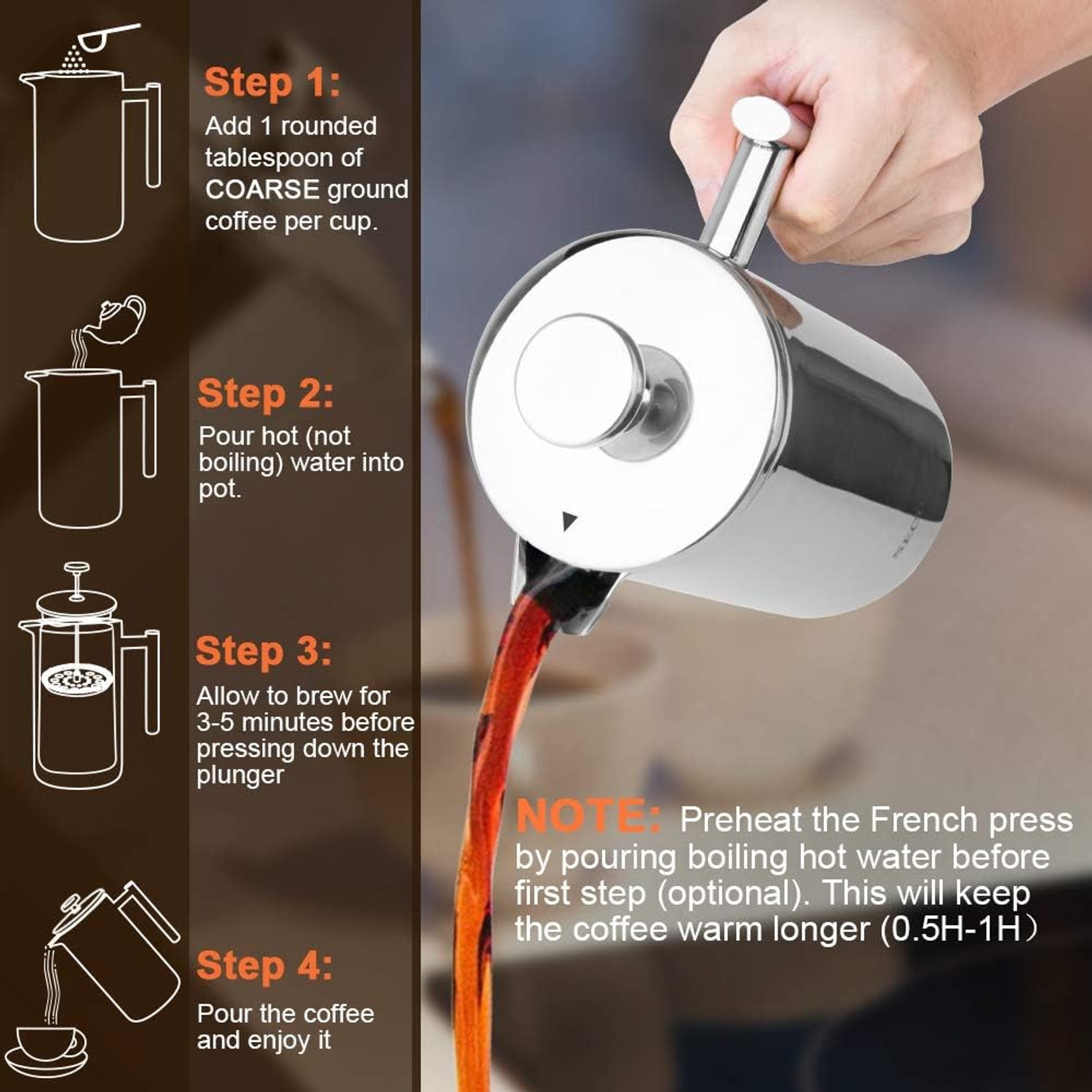
Coarse ground coffee is the listed input for this press. A very fine grind can pass through the filter more readily and make the plunger harder to lower. Start with coffee intended for French press brewing if you are unsure.
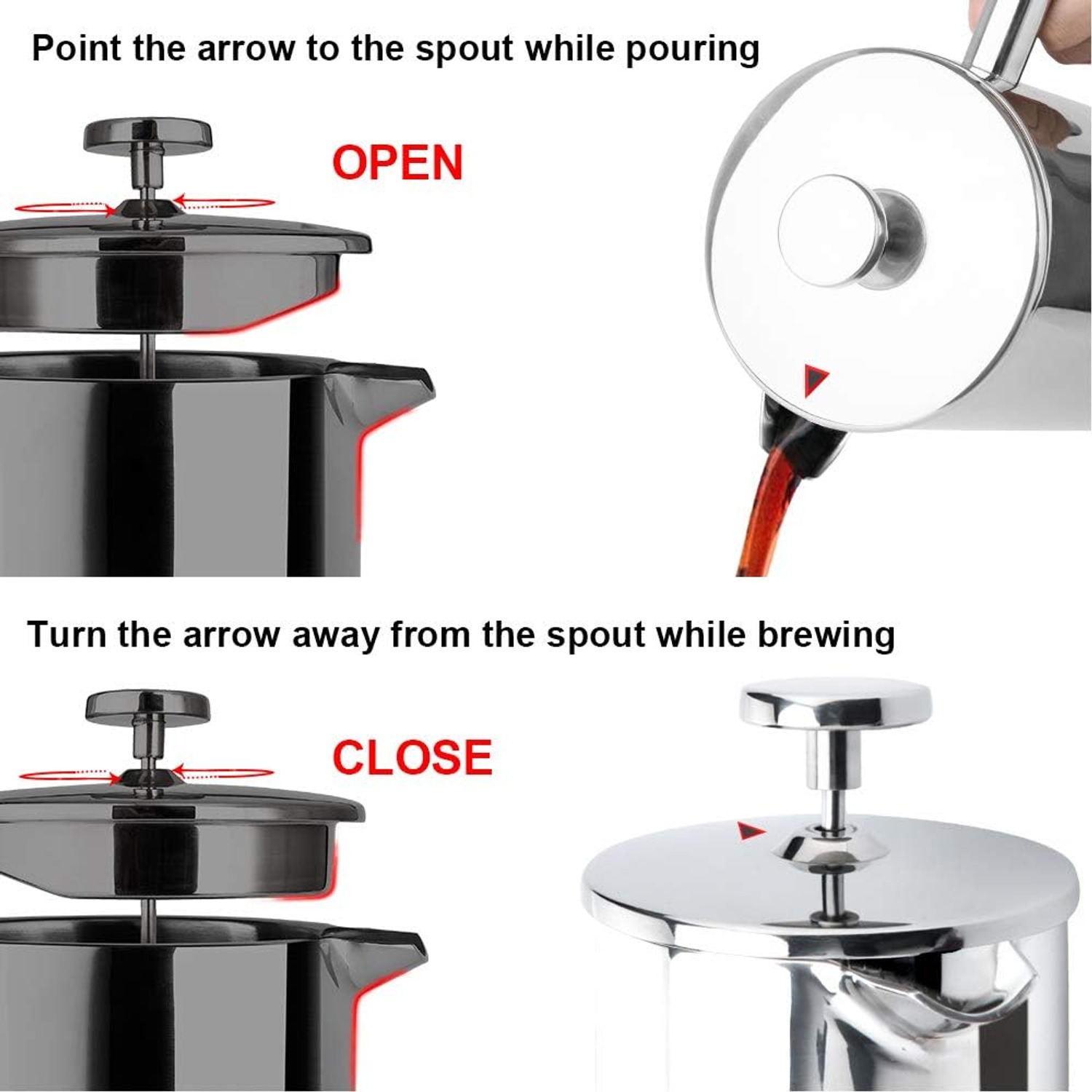
Follow the included manual for assembly and use. Place the vessel on a stable, heat-safe surface before adding coffee or hot water. Keep enough room for the lid and plunger rather than filling to the rim.
Lower the plunger slowly and evenly. If it feels unusually difficult, do not force it. Stop and check the instructions rather than pushing harder against hot liquid.
Once you have a starting recipe you enjoy, change one detail at a time. Adjusting the grind, coffee amount and steeping time all at once makes it harder to tell what improved the cup.
Check the size beyond its capacity
The listed dimensions are 15.1cm deep, 8.8cm wide and 17.6cm high. The listed weight is 481.94g. Those figures help you compare the press with a kitchen shelf, office cupboard or travel bag.
Leave extra room around the vessel for comfortable handling. Storage fit is not the same as working space. You need room to remove the lid, lift the plunger and pour without reaching around other items.
A compact French press can suit a smaller kitchen, but check the actual measurements instead of relying on photographs. Product images do not always make scale easy to judge.
The silver stainless steel finish is described as modern. Appearance may help you choose between otherwise suitable presses, but capacity, filter care and safe handling deserve attention first.
Consider it for travel, with limits
Travelling is a listed recommended use. Manual operation means you do not need an electrical connection for the press itself. You do, however, need a separate hot-water source.
It could suit a stay where you have a kettle, a stable surface and a place to wash up. Before packing, account for coffee, cleaning supplies and any separate cup you plan to use.
There is no supplied leakproof rating. Do not assume the lid makes it suitable for carrying brewed coffee inside a bag. Brew and pour while it is upright, then use an appropriate sealed container if you need to take your drink elsewhere.
The same checks apply at work. Access to hot water is only part of the setup. You also need a safe brewing spot and a way to dispose of grounds without blocking the sink.
Make cleanup part of the decision
The product is listed as dishwasher safe, including its parts. That can make routine cleaning easier, but the included manual should guide how you take apart, load and reassemble the filter.
Let the press cool before cleaning. Remove the grounds into a suitable waste or compost container, then rinse away loose particles. Avoid washing a mass of grounds down the drain.
Pay attention to the filter, not just the vessel. A body that looks clean may still have old grounds caught in the screen assembly. Check those areas and wash away coffee residue.
Dry the parts before storage and avoid abrasive cleaning tools. A dishwasher safe coffee press still benefits from a quick check after washing to make sure the filter is clear and correctly fitted.
Check what is confirmed before ordering
The component list names a 17oz French press, filter and user manual. The supplied references do not consistently state the number of extra screens. If spare filters are a deciding factor, ask for confirmation rather than assuming a particular quantity.
Brand, country of origin and warranty terms are not specified by the maker.
For a gift, confirm that the recipient likes manual brewing and would use a 500ml vessel. Standard packaging is listed, but gift presentation is not. A useful match to someone's coffee habits matters more than choosing by appearance alone.
The short version
This 500ml stainless steel coffee plunger offers manual brewing, double-wall insulation and a reusable filter in a smaller format. Dishwasher-safe parts add convenience, provided you keep the filter clean.
Choose it if the capacity suits your usual serving and you enjoy French press coffee. Look elsewhere if you need a large batch, automatic brewing or a confirmed leakproof travel container. A good choice starts with the coffee you make each day, not the longest feature list.